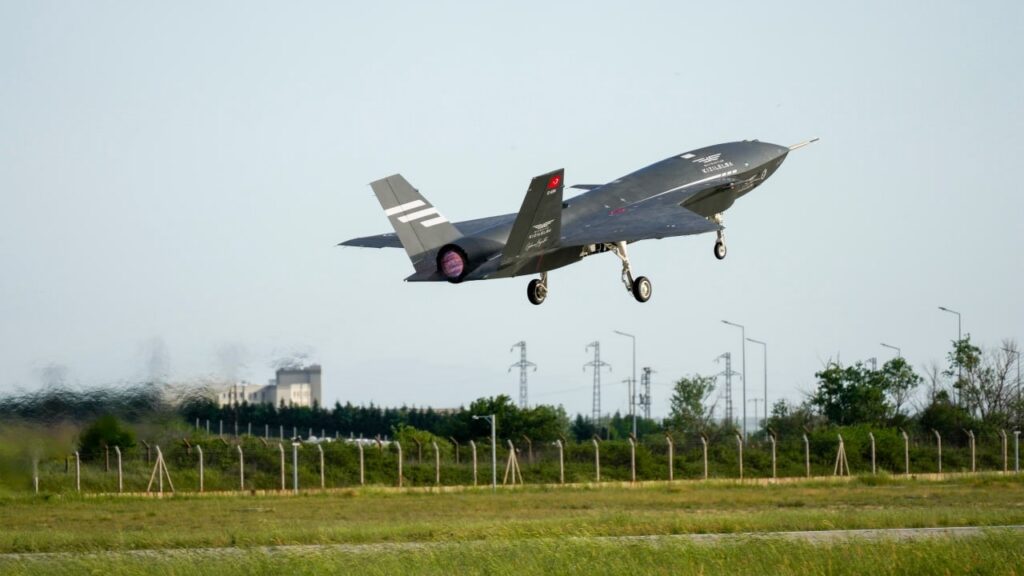
“The programme is aimed at designing and developing interoperability between crewed and uncrewed aircraft,” the companies said.
The increasing sophistication and affordability of uncrewed aerial systems (UAS) are driving rapid advancements in manned-unmanned teaming (MUT) concepts, making such tests a critical step for future military operations.
This development signifies a crucial step in integrating human decision-making with autonomous systems, fundamentally altering combat doctrines and potentially reducing risk to human pilots while increasing mission effectiveness.
The successful test flights move MUT from theoretical concept to practical application, accelerating the adoption of hybrid air forces and shaping future defence procurements and operational strategies globally.
- · Leonardo
- · Baykar
- · Defence contractors leveraging autonomy
- · Air forces adopting MUT
- · Traditional manned aviation manufacturers
- · Air forces slow to adapt
- · Legacy air combat doctrines
Further development and integration of AI for autonomous combat roles will be prioritized, leading to more sophisticated uncrewed operations.
The cost-effectiveness and reduced human risk of MUT will accelerate a shift in defence spending towards autonomous platforms and counter-UAS capabilities.
This could lead to a new arms race in autonomous and hybrid combat systems, fundamentally redefining military power balances and international security dynamics.
This signal links to a primary source. Continuum Brief monitors and indexes it as part of the live intelligence stream — we do not republish source content.
Read at Breaking Defense