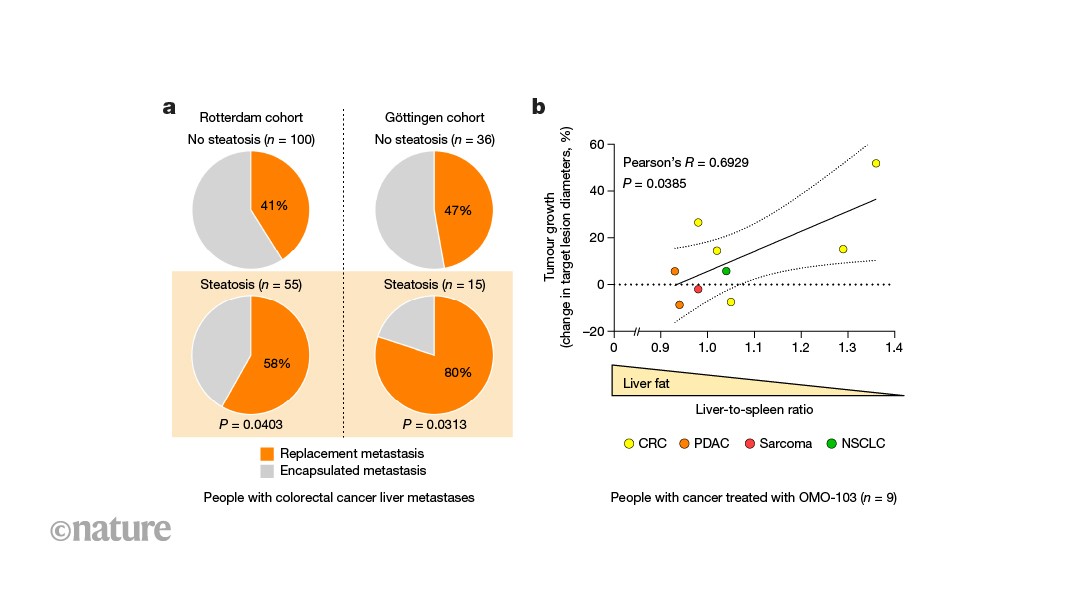
Nature, Published online: 01 July 2026; doi:10.1038/d41586-026-01747-7 In about 50% of people with colorectal cancer, tumour cells spread to distant organs. The ability of these metastases to grow into the liver tissue shapes prognosis. It emerges that liver fat promotes a form of liver metastasis with a poor prognosis, suggesting that individual-specific traits can inform risk stratification and treatment.
The continuous advancements in medical research and diagnostic techniques are constantly uncovering new insights into disease progression, making this discovery a natural evolution in cancer biology research.
This discovery provides critical new mechanistic understanding of colorectal cancer metastasis, offering a potential path to personalized medicine and improved prognostic accuracy for a prevalent and deadly disease.
The understanding of colorectal cancer treatment and risk stratification can now incorporate individual-specific metabolic traits, moving beyond generic treatment protocols.
- · Oncology researchers
- · Pharmaceutical companies developing targeted therapies
- · Patients with colorectal cancer
- · Diagnostic companies
- · Colorectal cancer patients with high liver fat (if not diagnosed early)
- · Generic chemotherapy approaches
Patients with colorectal cancer will undergo screenings for liver fat to inform their prognosis and treatment plan.
New drug development will focus on metabolic pathways in the liver to prevent or treat colorectal cancer metastasis.
Dietary and lifestyle interventions could become a standardized component of colorectal cancer prevention and treatment, based on metabolic profiling.
This signal links to a primary source. Continuum Brief monitors and indexes it as part of the live intelligence stream — we do not republish source content.
Read at Nature — Latest Research