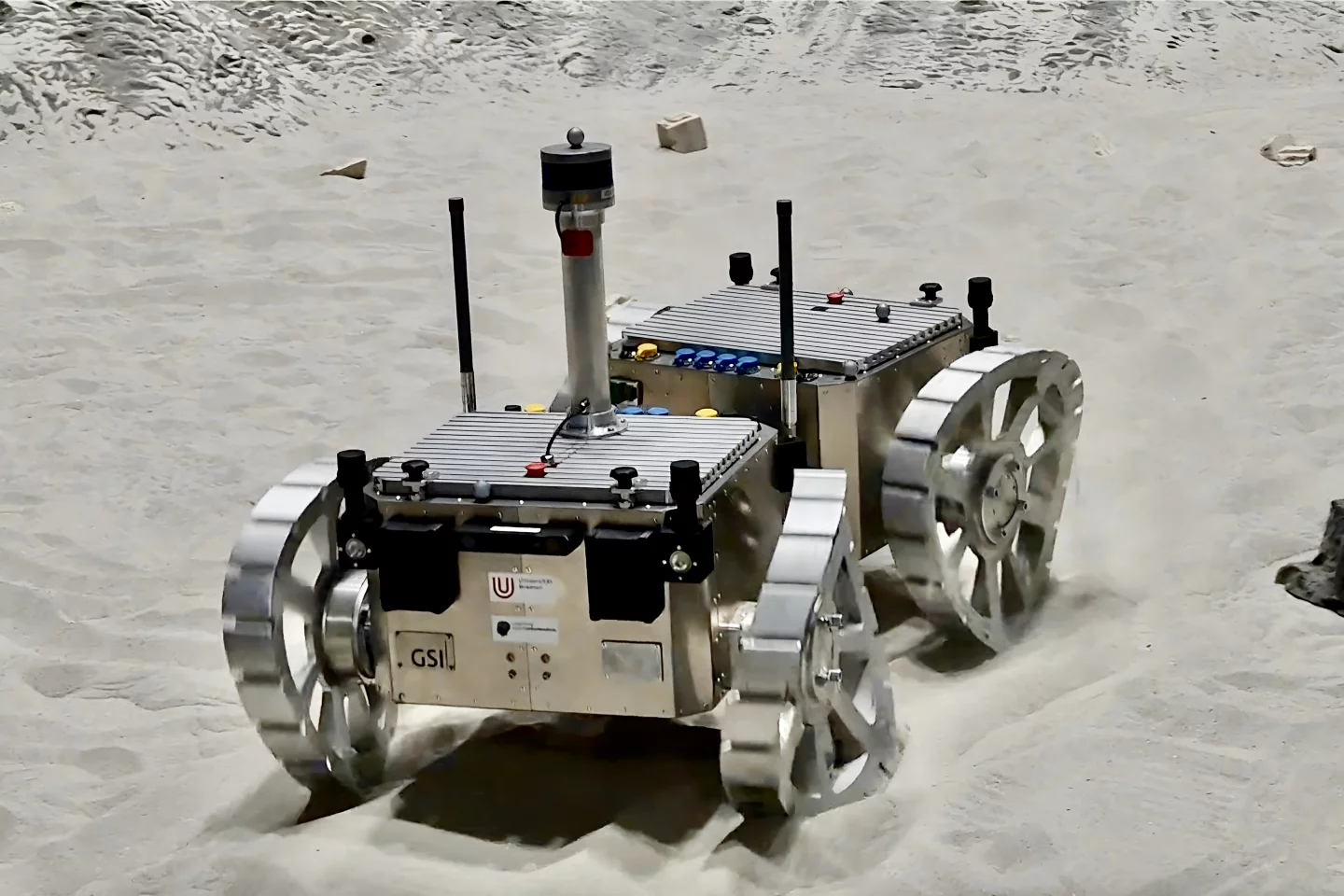
The sandfish lizard moves very efficiently through the sands of the Sahara desert, and not surprisingly, it doesn't use wheels to do so. Scientists have now copied the reptile's swimming motion in an experimental Mars rover that outperforms others in sandy soil. Continue Reading Category: Robotics , Engineering Tags: locomotion , Biomimicry , Wheel , Rover , Mars
Ongoing advancements in robotics and biomimicry are continually pushing the boundaries of autonomous exploration, driven by the desire for more resilient and efficient systems in challenging environments.
This development represents a significant step in improving robotic mobility in difficult terrains, crucial for space exploration and potentially terrestrial applications, impacting mission success and operational efficiency.
Mars rovers could become significantly more capable of traversing diverse and challenging sandy landscapes, reducing the risk of getting stuck and expanding exploration zones.
- · Space agencies
- · Robotics researchers
- · Planetary exploration missions
- · Traditional wheel-driven rover designs
- · Missions constrained by limited sandy terrain navigation
Mars missions will benefit from enhanced mobility and broader exploration capabilities in sandy regions.
The biomimicry principles could be adapted for terrestrial robotics in desert, agricultural, or disaster relief scenarios.
Increased success in planetary exploration may accelerate funding and public interest in space science and robotics research.
This signal links to a primary source. Continuum Brief monitors and indexes it as part of the live intelligence stream — we do not republish source content.
Read at New Atlas — Robotics