Lockheed breaks ground on new THAAD interceptor plant, as Pentagon pushes for more weapons production
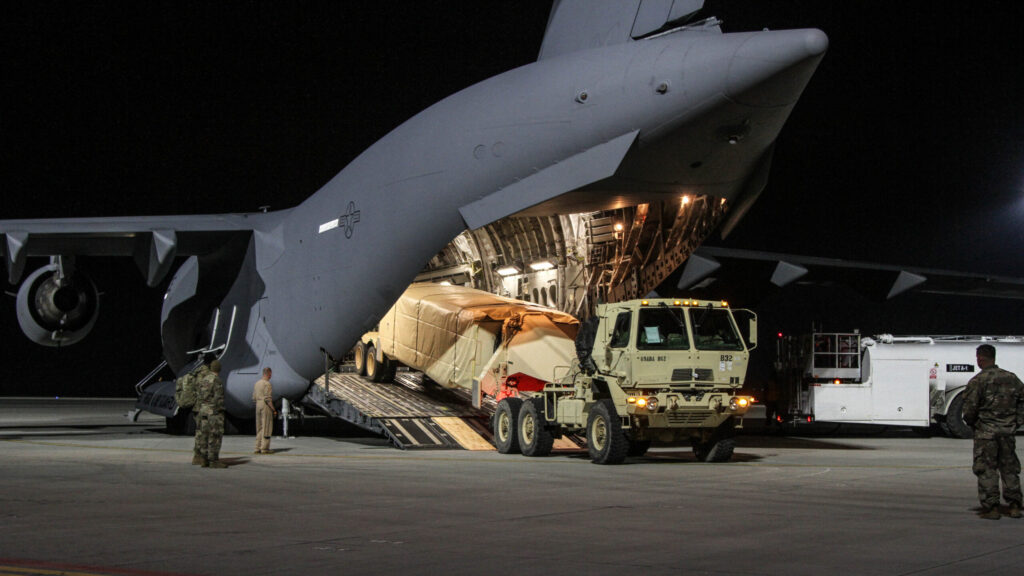
“These aren’t just ideas or papers going back and forth,” Lockheed CEO Jim Taiclet said of the Pentagon’s munitions ramp. “We know it’s going to be good, and we know it’s going to happen.”
The Pentagon is actively pushing for increased weapons production capacity, driven by current geopolitical events and the need to restock and modernize arsenals after recent conflicts.
This move signifies a concrete step towards rebuilding the Western defence industrial base, indicating a long-term commitment to higher defence spending and a shift in production strategy leveraging private industry.
Defence contractors like Lockheed Martin are significantly expanding their manufacturing capabilities, moving beyond concept and into physical infrastructure development for sustained, high-volume production.
- · Lockheed Martin
- · Defence contractors
- · US defence industrial base
- · Allied militaries
- · Adversary nations relying on slow Western production
- · Advocates for reduced defence spending
- · Companies not able to scale production
Increased availability of advanced missile defence systems like THAAD for US and allied forces.
Potential for new defence technology development accelerates as predictable demand drives R&D investment.
Long-term geopolitical implications where sustained US military industrial strength acts as a significant deterrent and power projection tool.
This signal links to a primary source. Continuum Brief monitors and indexes it as part of the live intelligence stream — we do not republish source content.
Read at Breaking Defense