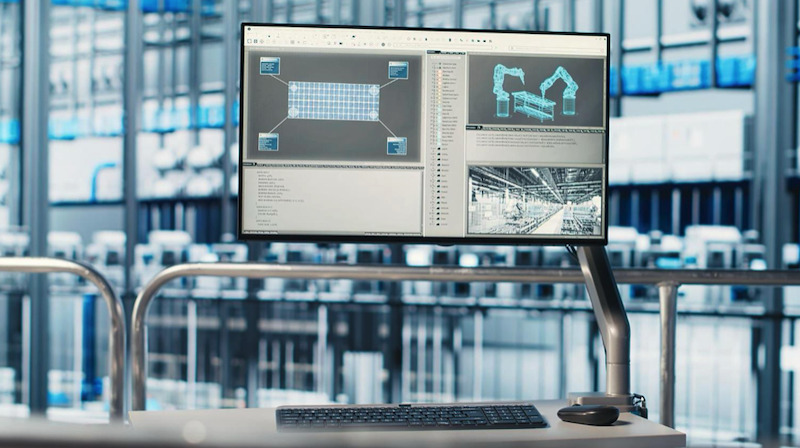
Machine vision systems are becoming increasingly important across modern industrial environments. Factories, warehouses, logistics centers, robotics platforms, and automated production facilities now rely heavily on cameras, sensors, and AI-assisted visual analysis to improve operational efficiency and decision-making. These systems help monitor production lines, inspect product quality, track inventory movement, support predictive maintenance, and improve workplace […]
The increasing sophistication and affordability of AI-powered vision systems are driving their broader adoption across industrial use cases, necessitating more robust data infrastructure.
This widespread deployment signals a significant step towards more automated and intelligent industrial operations, impacting efficiency, quality control, and predictive maintenance across numerous sectors.
Industrial environments are shifting from manual inspection to automated, AI-driven visual analysis, requiring scalable media infrastructure to handle the massive data volumes generated.
- · AI development companies
- · Semiconductor manufacturers
- · Data infrastructure providers
- · Robotics manufacturers
- · Manual labor in inspection roles
- · Legacy manufacturing methods
- · Companies slow to adopt automation
Increased demand for high-bandwidth networking and data storage solutions in industrial settings.
Higher quality control standards and reduced production errors leading to more competitive manufacturing.
The proliferation of AI vision systems could create new security vulnerabilities in industrial control systems if not properly secured.
This signal links to a primary source. Continuum Brief monitors and indexes it as part of the live intelligence stream — we do not republish source content.
Read at Robotics & Automation News