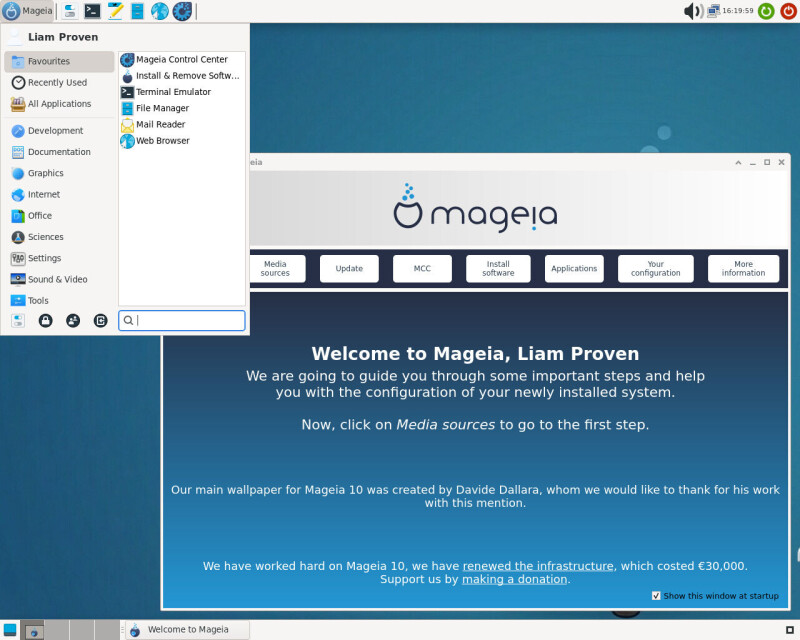
Polished Mandriva descendant still makes room for PCs the 64-bit world has left behind
The continuous development and release of new Linux distributions, particularly those maintaining support for older hardware, highlights the ongoing divergence between leading-edge and legacy tech stacks.
Maintaining support for 32-bit systems extends the useful life of older hardware, which can be critical for certain sectors, developing economies, or users who cannot afford frequent upgrades.
This specific update doesn't fundamentally change the tech landscape but reinforces the long-tail support for older systems within the open-source community, contrasting with commercial vendors' planned obsolescence.
- · Users with older 32-bit hardware
- · Open-source communities focused on accessibility
- · Organizations relying on legacy systems
- · Hardware manufacturers pushing 64-bit upgrades
- · Software developers focusing exclusively on modern architectures
Mageia 10 provides a current and supported operating system option for 32-bit hardware.
The extended lifespan of 32-bit machines could lead to a small reduction in electronic waste and resource consumption from hardware replacement.
This persistent support for older architecture might subtly influence long-term adoption rates of newer, more resource-intensive software by a segment of users.
This signal links to a primary source. Continuum Brief monitors and indexes it as part of the live intelligence stream — we do not republish source content.
Read at The Register