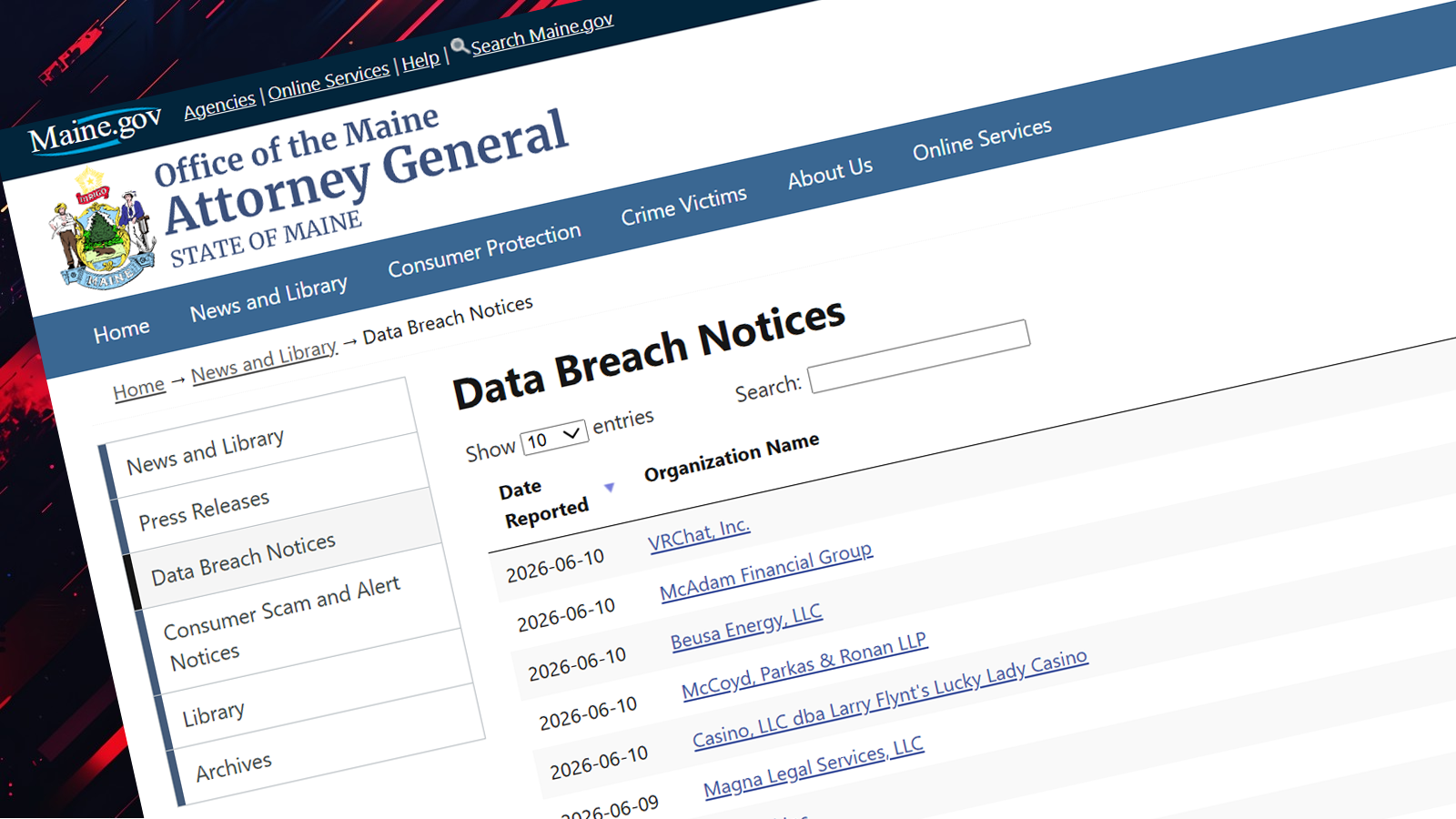
In an unusual misinformation campaign, fraudulent data breach disclosures were submitted to Maine's official breach portal and publicly posted before their legitimacy could be verified, prompting companies to deny the claims. [...]
The incident highlights the immediate vulnerability of public information systems to disinformation campaigns, especially as digital services become more prevalent and integrated into state functions.
A sophisticated reader should care because this demonstrates a new vector for information warfare and reputational damage, where official government portals can be weaponized to spread false narratives, impacting trust in institutions and data integrity.
The incident changes the perception of official government breach portals, showing they can be exploited for misinformation, leading to increased scrutiny and potential reevaluation of verification protocols for publicly accessible data.
- · Cybersecurity verification services
- · Digital identity solutions
- · Affected companies
- · Government breach portals
- · Public trust in official disclosures
Companies are forced to issue public denials and clarify their data security status, incurring reputational and operational costs.
Government entities will likely implement more robust verification processes and potentially delay public posting of breach disclosures, affecting transparency.
The success of such tactics could encourage bad actors to scale similar misinformation campaigns using other vulnerable public systems, eroding public trust in digital information exchange more broadly.
This signal links to a primary source. Continuum Brief monitors and indexes it as part of the live intelligence stream — we do not republish source content.
Read at BleepingComputer