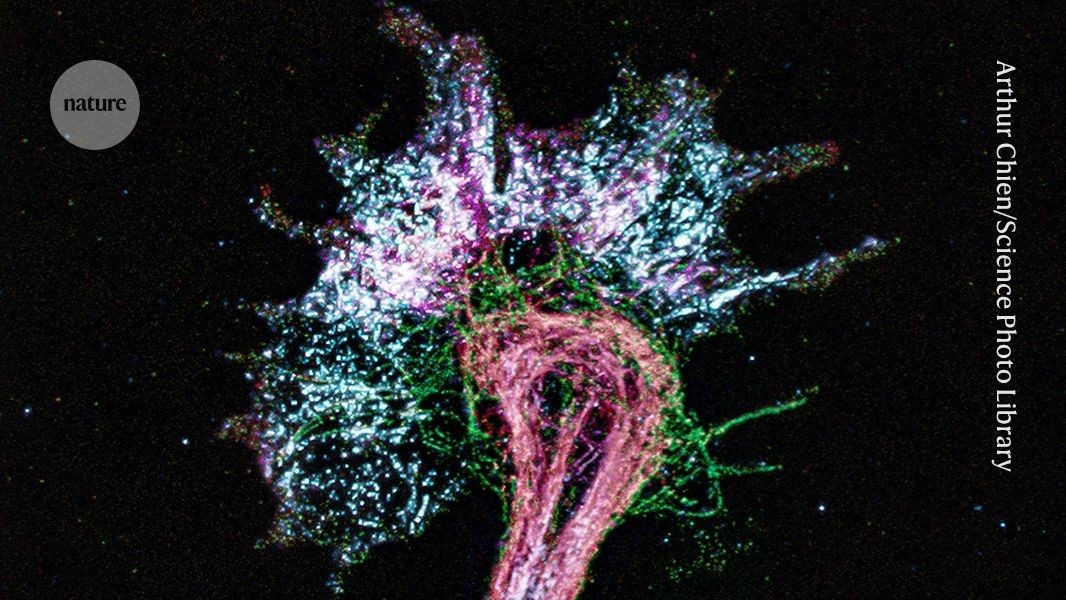
Nature, Published online: 23 June 2026; doi:10.1038/d41586-026-01842-9 Stretching protein samples in all directions pulls molecules farther apart, allowing them to be visualized using only light microscopy.
This breakthrough leverages a novel sample preparation technique, enabled by recent advancements in materials science and microscopy, to overcome previous limitations in visualizing molecular structures at sub-wavelength resolutions.
It demonstrates a significant leap in biological imaging capabilities, making complex molecular analysis accessible with simpler, more widespread tools, potentially democratizing advanced research.
Previously unobservable molecular details, particularly amino acid sequences within proteins, can now be directly visualized using conventional light microscopes, bypassing the need for expensive electron microscopes in some applications.
- · Biotech research institutions
- · Pharmaceutical R&D
- · Microscope manufacturers
- · Academic biology departments
Researchers gain a powerful and cost-effective tool for protein structure analysis and drug discovery.
This democratizes access to high-resolution biological insights, accelerating innovation in fields like synthetic biology and personalized medicine.
The enhanced imaging capabilities could lead to new discoveries in protein folding diseases and facilitate the design of novel therapeutics on a much faster timeline.
This signal links to a primary source. Continuum Brief monitors and indexes it as part of the live intelligence stream — we do not republish source content.
Read at Nature — Latest Research