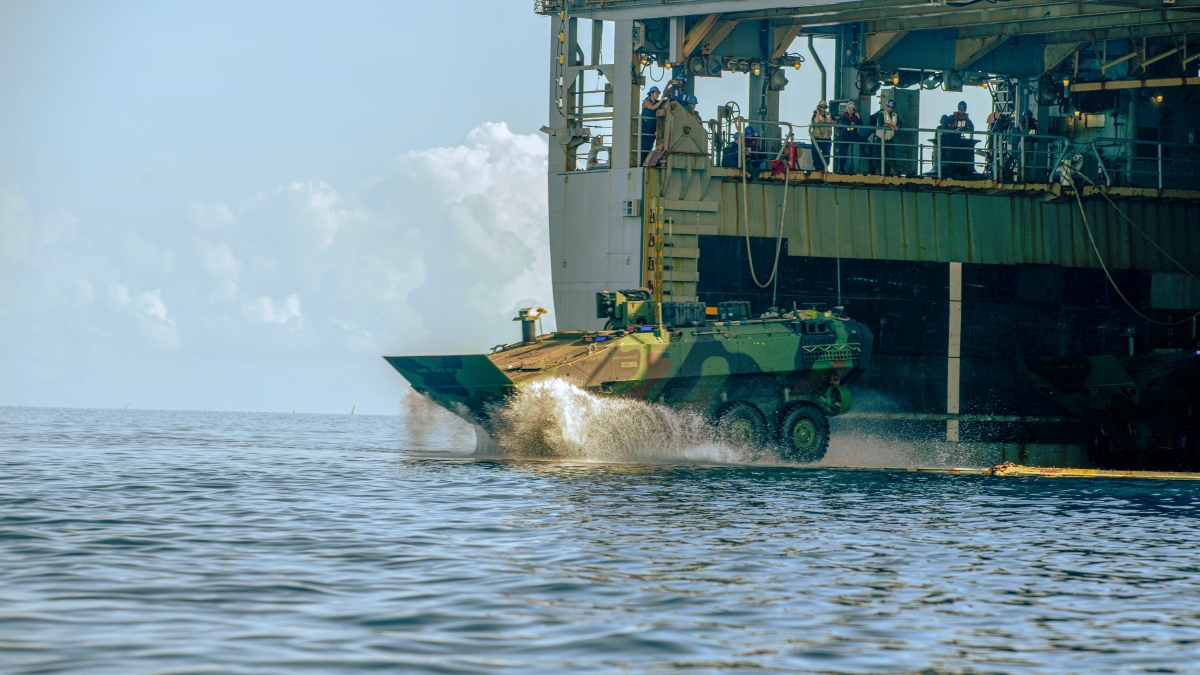
A crew gunnery training prototype for the new amphibious combat vehicle will simulate an all-out fight with an unpredictable adversary.
Amidst increasing global tensions and the integration of advanced technologies in warfare, the US military is rapidly adopting sophisticated training methods to prepare for dynamic and unpredictable conflicts.
This initiative signifies a clear move towards more adaptable and technologically advanced military training, recognizing that future conflicts will involve 'thinking adversaries' and requiring personnel to operate complex systems like the ACV effectively.
Military training paradigms are shifting from static, scripted scenarios to dynamic, AI-driven simulations, aiming to produce combat-ready personnel capable of real-time adaptation against intelligent threats.
- · Defence tech companies
- · Military simulation and VR developers
- · US Marine Corps
- · Allied defence forces
- · Traditional defence training methodologies
- · Foresight-poor militaries
- · Legacy simulation hardware providers
The prototype will enhance the combat readiness and operational effectiveness of Marine ACV crews.
This advanced VR training could become a standard across various military branches, accelerating the adoption of AI-driven simulation for complex weapon systems.
The development of highly realistic 'thinking adversaries' in simulations may lead to advancements in AI that have dual-use applications in civilian industries for training and complex problem-solving.
This signal links to a primary source. Continuum Brief monitors and indexes it as part of the live intelligence stream — we do not republish source content.
Read at Navy Times