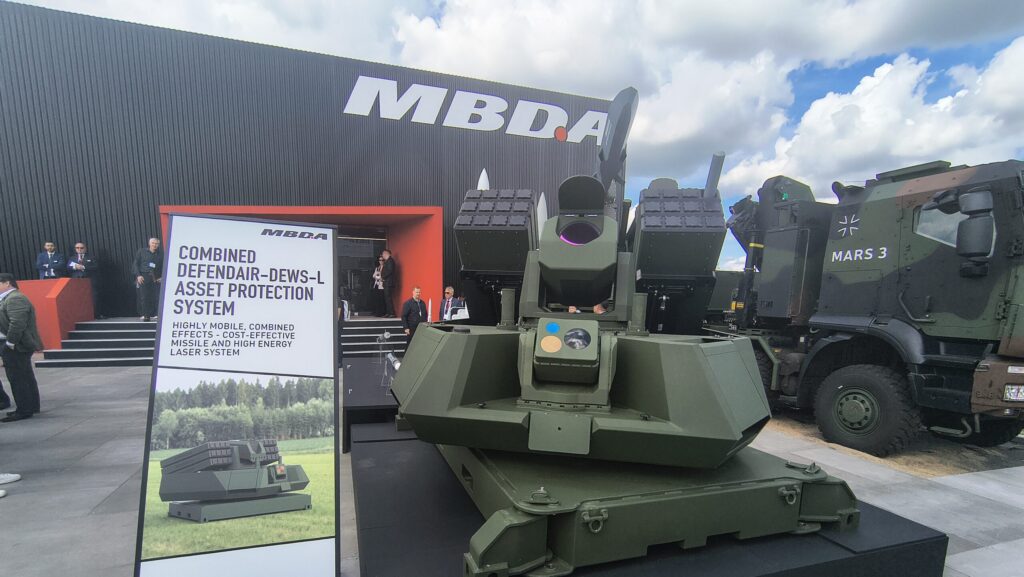
The European missile house says that the hybrid platform, which could enter service with Germany before the end of the decade, has been designed to address the “growing challenge of small, fast, and low-cost unmanned aerial threats.”
The proliferation of affordable and effective drone technology has created an urgent need for advanced counter-drone systems, especially in light of recent conflicts demonstrating their impact.
This development represents a significant step in Western military capabilities to defend against asymmetric drone threats, enhancing force protection and potentially influencing future conflict dynamics.
The operationalization of hybrid laser-interceptor systems changes how countries can defend critical assets and personnel from evolving aerial threats, offering a layered and cost-effective defense.
- · MBDA
- · European defense sector
- · German military
- · Counter-drone technology developers
- · Low-cost drone manufacturers
- · State and non-state actors reliant on drone swarms for asymmetric advantage
Successful deployment of hybrid counter-drone systems leads to reduced vulnerability of military and civilian targets to small, fast, and low-cost unmanned aerial threats.
The proven effectiveness of these systems drives further investment and adoption among allied nations, creating a new standard for air defense against drones.
The widespread availability of advanced counter-drone technology could necessitate a strategic shift in the design and deployment of offensive drone capabilities, emphasizing stealth or swarm resilience.
This signal links to a primary source. Continuum Brief monitors and indexes it as part of the live intelligence stream — we do not republish source content.
Read at Breaking Defense