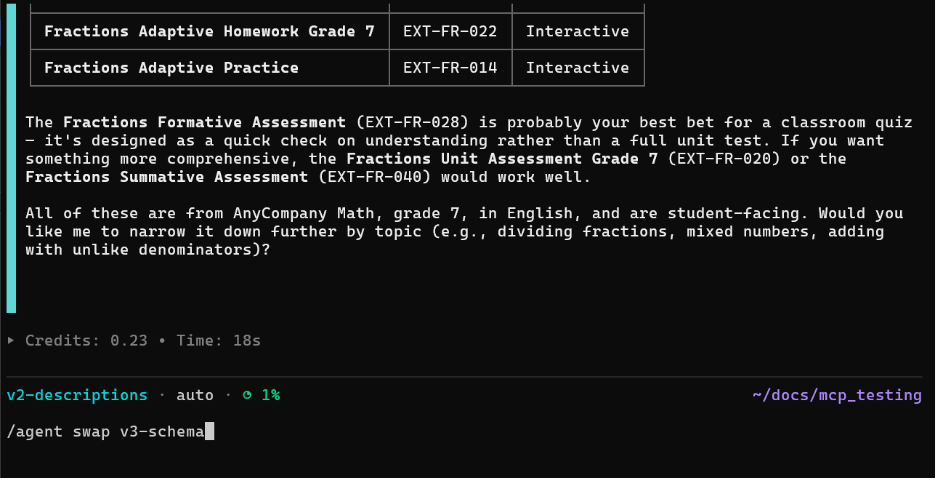
In this post, we show where MCP tool design goes wrong and how to fix it with practical context engineering approaches.
The proliferation of complex AI systems, particularly large language models, necessitates more robust and efficient methods for managing their lifecycle and performance, making tool design critical today.
Sophisticated readers understand that efficient and well-designed AI tools are crucial for scaling AI applications, reducing operational overhead, and ensuring the reliability of advanced AI systems.
The focus on practical approaches and context engineering in AI tool design signifies a maturation in the development and deployment of AI, moving beyond raw model performance to operational excellence.
- · AI developers
- · Cloud providers (AWS)
- · Enterprises adopting AI
- · AI infrastructure providers
- · Companies with poor AI tool design
- · Inefficient AI development cycles
Improved stability and performance of AI applications across various industries.
Accelerated adoption of AI in critical sectors as reliability concerns are addressed.
Enhanced competition among AI solution providers based on tool efficiency and operational integrity, not just model size.
This signal links to a primary source. Continuum Brief monitors and indexes it as part of the live intelligence stream — we do not republish source content.
Read at AWS Machine Learning Blog