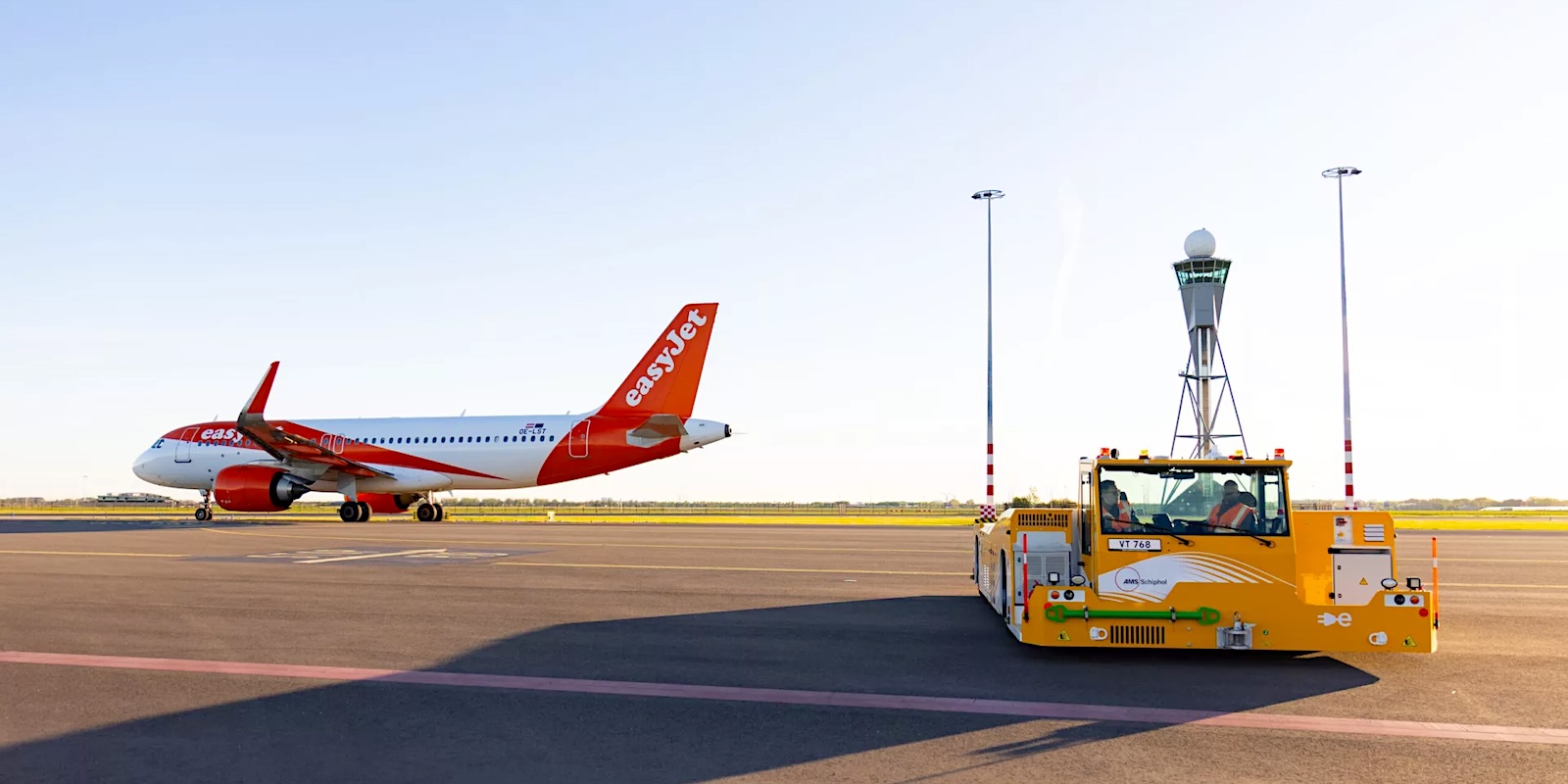
Amsterdam’s Schiphol Airport is testing an electric aircraft tug that can both move the plane around the tarmac and power its auxiliary systems – and that second bit could slash ground-level airport emissions by more than 80%, saving gobs of money on fuel in the process. more…
The aviation industry is under increasing pressure to reduce emissions, making electric alternatives viable for ground operations, especially with advancing battery and motor technology.
This development signals a significant step towards decarbonizing airport ground operations, offering substantial environmental and economic benefits through reduced fuel consumption and emissions.
Airport ground operations can now achieve substantial emission reductions and cost savings by adopting electric aircraft tugs that also power aircraft auxiliary systems.
- · Manufacturers of electric ground support equipment
- · Airports adopting electric infrastructure
- · Airlines seeking operational cost reductions
- · Environmental technology companies
- · Manufacturers of traditional fossil-fuel ground support equipment
- · Fossil fuel suppliers to airport ground operations
Widespread adoption of electric tugs reduces airport-level carbon emissions and noise pollution.
Demand for airport charging infrastructure will increase, potentially integrating with broader grid modernization efforts.
The success of electric ground operations may accelerate the development and adoption of electric propulsion for short-haul aircraft and other airport vehicles.
This signal links to a primary source. Continuum Brief monitors and indexes it as part of the live intelligence stream — we do not republish source content.
Read at Electrek