Meta releases version two of its brain-computer interface that can turn thoughts into keypresses — non-invasive magnetoencephalography scanner can measure changes in brain activity
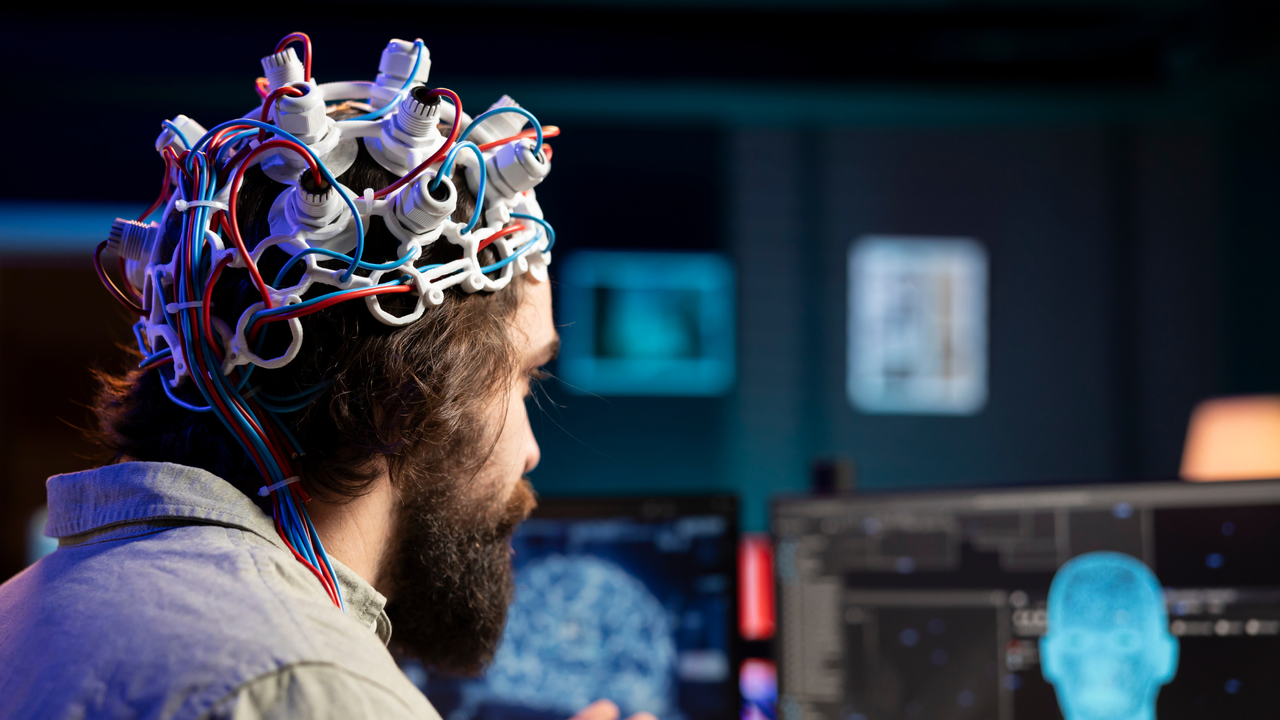
Meta just released the second version of its Brain2Qwerty non-invasive BCI, showing promising improvements that could lead to clinical trials. This system aims to build an interface that does not require invasive surgery, allowing patients to control a computer using their mind without needing to go under the knife.
Advances in neuroimaging and AI are converging, enabling more sophisticated non-invasive brain-computer interfaces to move from research to potential application. Meta's continued investment signals a maturity in the field.
This development represents a significant step towards practical, non-invasive BCI technology, which could fundamentally alter human-computer interaction and provide new capabilities for individuals with motor disabilities. It also highlights Meta's strategic diversification into foundational tech.
The improvement in non-invasive BCI capability reduces the barrier to entry for mind-controlled interfaces, making them more accessible and potentially accelerating their adoption in clinical and eventually consumer settings. It validates a long-held vision for direct brain-computer interaction.
- · Meta
- · Patients with motor disabilities
- · Assistive technology sector
- · Neurotechnology researchers
- · Companies reliant solely on traditional input devices
- · Invasive BCI developers (if non-invasive catches up)
- · Keyboard and mouse manufacturers
Individuals will gain the ability to control digital interfaces with thought, removing physical input as a barrier for many.
Wider adoption of non-invasive BCI could lead to widespread integration into common consumer electronics, similar to voice control becoming ubiquitous.
The development could accelerate ethical and privacy discussions surrounding brain data and mental autonomy as BCI technology becomes more advanced and integrated into daily life.
This signal links to a primary source. Continuum Brief monitors and indexes it as part of the live intelligence stream — we do not republish source content.
Read at Tom's Hardware