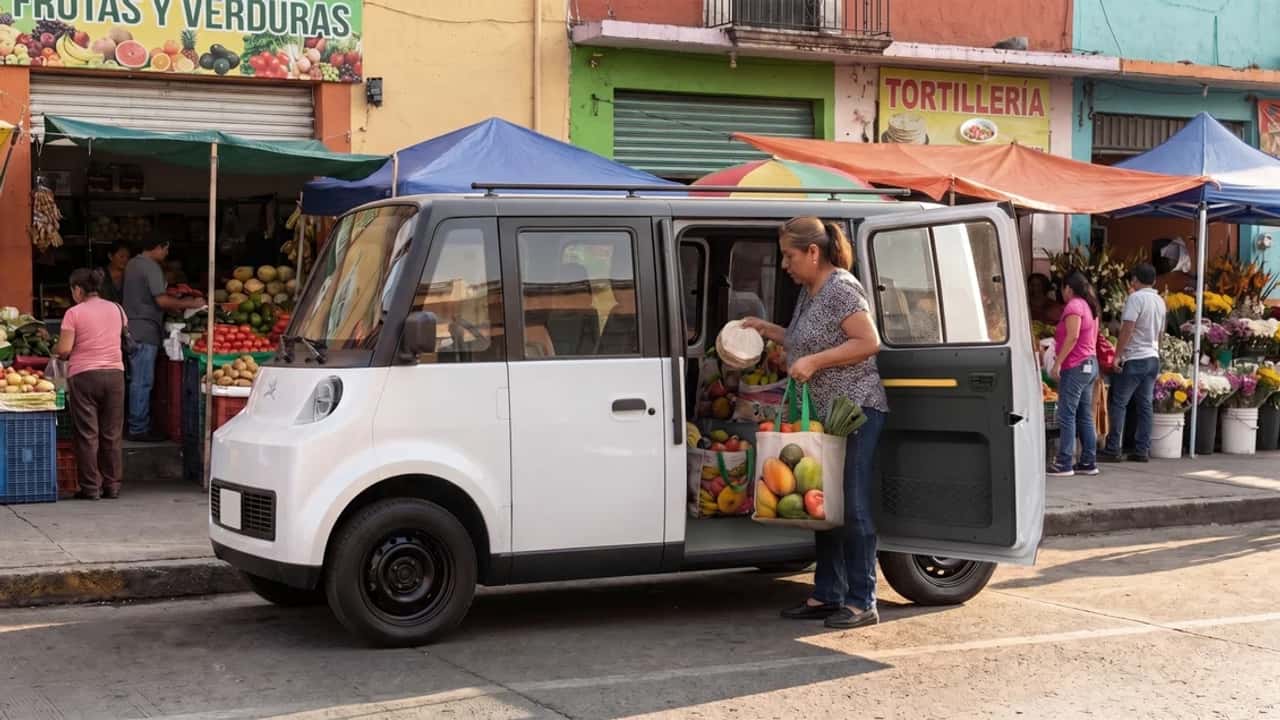
The Olinia Uno seats six, can take a wheelchair, and is made, designed, and developed entirely in Mexico.
This development reflects a global trend towards domestic EV production and affordability, intensified by industrial policy in many nations aiming for self-sufficiency and economic growth.
A state-backed, ultra-affordable, and domestically produced EV in a major developing economy like Mexico signals a significant challenge to established automotive markets and supply chains.
The entry of low-cost, domestically developed EVs from non-traditional automotive powers could disrupt pricing, market access, and industrial strategies for global automakers.
- · Mexican EV industry
- · Mexican consumers
- · Emerging market consumers
- · Local supply chains
- · Legacy automakers (foreign)
- · Higher-cost EV manufacturers
- · Global automotive export markets
Mexico establishes a stronger domestic EV industry and potentially positions itself as an EV exporter to Latin America.
Increased competition in the affordable EV segment could force other automakers to lower prices or accelerate localized production.
This could lead to a fragmented global EV market with strong regional players, potentially impacting international trade agreements and manufacturing strategies.
This signal links to a primary source. Continuum Brief monitors and indexes it as part of the live intelligence stream — we do not republish source content.
Read at InsideEVs