Microsoft Reports Advances in Majorana 2 Following Debate Over Last Year’s Topological Claims
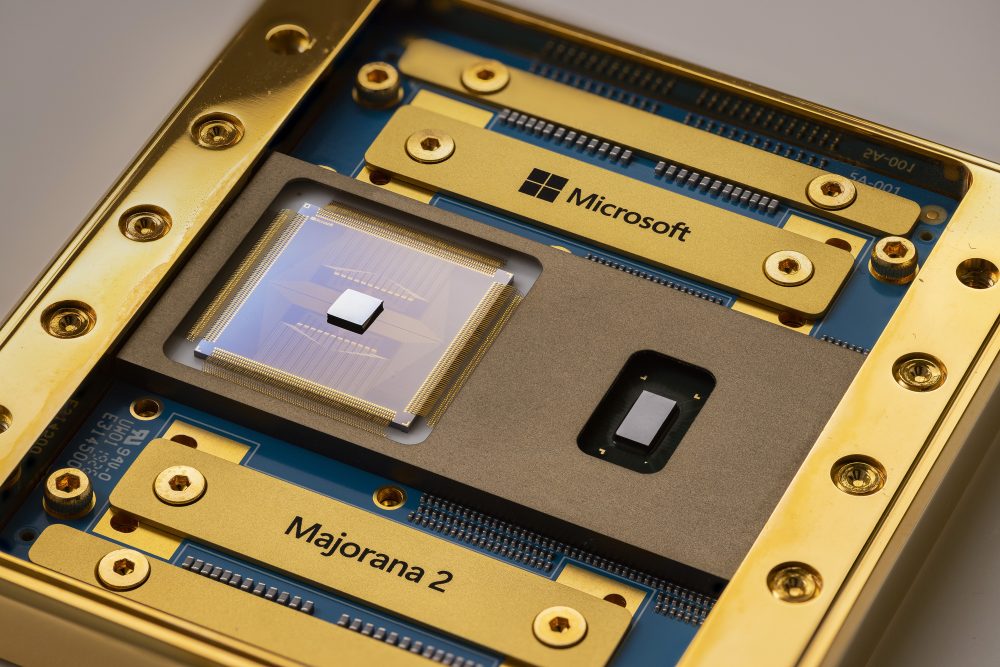
Insider Brief Microsoft is reporting that it has achieved a more than 1,000-fold improvement in the stability of its topological qubits, a result the company argues brings its long-debated quantum computing approach significantly closer to practical machines and supports a roadmap targeting a scalable quantum computer by 2029. The announcement, detailed in a Microsoft technical […]
Microsoft is pushing to validate its topological quantum computing approach after previous claims faced scrutiny, aiming to establish a clear path towards practical quantum machines within a specified timeframe.
This represents a significant advancement in quantum qubit stability, potentially accelerating the timeline for scalable quantum computing and validating a specific architectural approach in a highly competitive field.
The reported 1,000-fold improvement in topological qubit stability significantly de-risks Microsoft's quantum strategy, making its 2029 scalability target appear more feasible and strengthening its position against rival quantum computing methods.
- · Microsoft
- · Quantum computing researchers
- · Early adopters of quantum computation
- · Topological quantum computing sector
- · Competitors with less stable qubit technologies
- · Skeptics of topological quantum computing
Increased investment and R&D into topological quantum computing architectures as Microsoft validates its approach.
Other quantum computing paradigms face heightened pressure to demonstrate similar levels of qubit stability and error correction.
Accelerated timeline for quantum advantage across various industries, creating new market leaders and disrupting traditional computational methods.
This signal links to a primary source. Continuum Brief monitors and indexes it as part of the live intelligence stream — we do not republish source content.
Read at The Quantum Insider