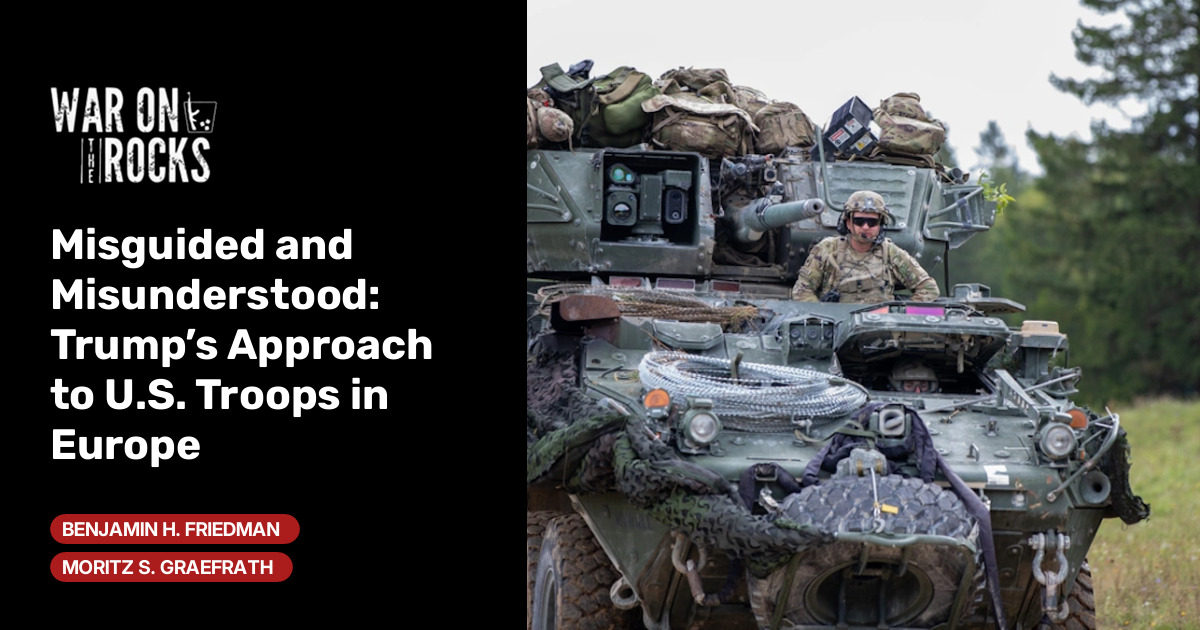
For many observers, Secretary of Defense Pete Hegseth’s speech on the future of NATO, delivered in Brussels on June 18, 2026, constituted a perfect example of how the Trump administration is angrily abandoning the longstanding U.S. commitment to European security. The prevailing picture is that the administration is eager to shift the burden of Europe’s defense and is thus moving to withdraw U.S. forces from the continent, even though Europe is moving to do more militarily. Hegseth stated, “we’re doubling down on our effort to make NATO what it always was supposed to be, a balanced alliance wi
The speech by Secretary of Defense Hegseth provides a clear articulation of the current Trump administration's evolving stance on NATO and U.S. troop presence in Europe, prompting immediate re-evaluation among allies.
This event signals a potential shift in U.S. foreign policy and defense posture towards its European allies, influencing alliance dynamics, burden-sharing, and security arrangements.
The perceived U.S. commitment to European security is being redefined, potentially leading to increased self-reliance and defense spending among European nations and a recalibration of NATO's operational focus.
- · European domestic defense industries
- · Non-NATO U.S. strategic partners
- · Isolationist political factions
- · NATO's traditional collective defense posture
- · European nations heavily reliant on U.S. military presence
- · Multilateral security frameworks
European NATO members will likely increase their defense budgets and military capabilities, potentially fostering greater regional defense integration.
A reduced U.S. military footprint in Europe could embolden revisionist powers and create new security vacuums, particularly in Eastern Europe.
The long-term impact on global power dynamics could see a more fragmented international security architecture with diminished transatlantic cohesion.
This signal links to a primary source. Continuum Brief monitors and indexes it as part of the live intelligence stream — we do not republish source content.
Read at War on the Rocks