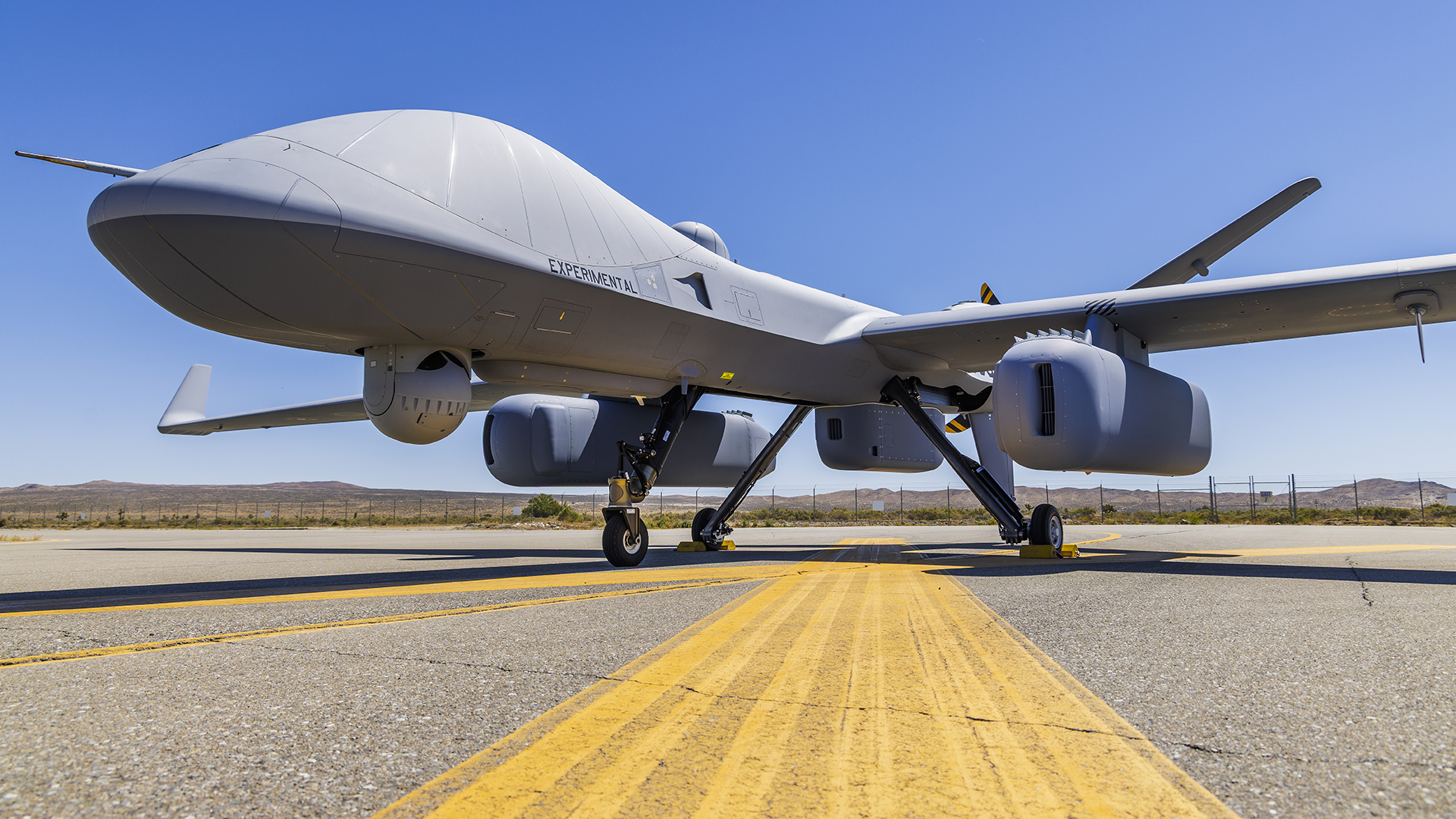
Radar pod-toting MQ-9s present an economical and highly-flexible persistent airborne early warning solution that is needed now more than ever. The post MQ-9 Getting Airborne Early Warning Radar Is A Huge Deal appeared first on The War Zone .
The increasing proliferation of drones and precision weaponry necessitates more flexible and persistent airborne early warning capabilities for modern battlefields.
This development allows for a more economical and adaptable approach to aerial surveillance and target acquisition, enhancing situational awareness without committing high-value crewed assets.
Traditional airborne early warning systems, typically reliant on large, expensive aircraft, are supplemented by more distributed and persistent drone-based solutions, democratizing the capability.
- · Defence contractors specializing in drone systems and radar technology
- · Countries with limited defence budgets seeking advanced surveillance
- · Operational commanders requiring persistent, flexible ISR
- · Unmanned aerial vehicle manufacturers
- · Manufacturers of traditional, larger airborne early warning aircraft
- · Adversaries relying on stealth or swarming tactics without robust counter-drone
- · High-cost, low-persistence ISR platforms
MQ-9 drones equipped with AEWR pods provide extended, persistent surveillance over large areas.
This capability could lead to a significant increase in the detection and interdiction of adversary aircraft, drones, and cruise missiles.
The widespread adoption of such economical AEW platforms might shift investment away from large crewed surveillance aircraft and towards smaller, more numerous autonomous systems, influencing future defence acquisition strategies.
This signal links to a primary source. Continuum Brief monitors and indexes it as part of the live intelligence stream — we do not republish source content.
Read at The War Zone