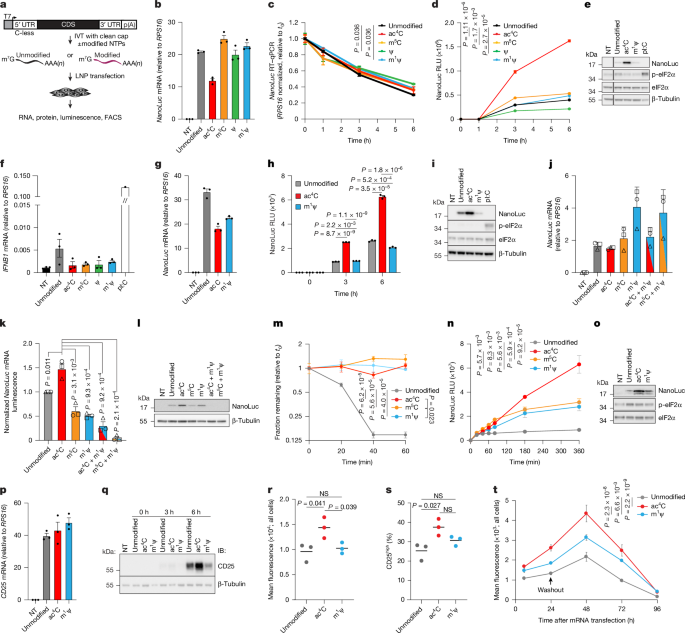
Nature, Published online: 01 July 2026; doi:10.1038/s41586-026-10729-8 Different RNA modifications elicit different translation elongation rates for in vitro transcribed mRNAs that result in disparate translation outputs and fidelity, as shown here for N4-acetylcytidine versus the industry standard for synthetic mRNAs, N1-methylpseudouridine.
Ongoing research into mRNA technology, spurred by recent successes, continues to refine its efficiency and therapeutic potential.
This discovery offers a significant advancement in synthetic mRNA manufacturing, potentially making a wide range of mRNA-based therapies and vaccines more effective and accessible.
The efficiency and fidelity of synthetic mRNA translation can be substantially improved by using N4-acetylcytidine, moving beyond the current industry standard.
- · Biopharmaceutical companies
- · mRNA therapeutic developers
- · Patients needing vaccines or gene therapies
- · Synthetic biology researchers
- · Companies heavily invested in older mRNA modification methods
- · Developers slow to adopt new mRNA synthesis techniques
Improved mRNA translation leads to more potent and safer mRNA therapeutics and vaccines.
Accelerated development and approval of new mRNA-based drugs for a wider array of diseases.
Enhanced programmability of biological systems drives broader applications of synthetic biology in medicine and beyond.
This signal links to a primary source. Continuum Brief monitors and indexes it as part of the live intelligence stream — we do not republish source content.
Read at Nature — Latest Research