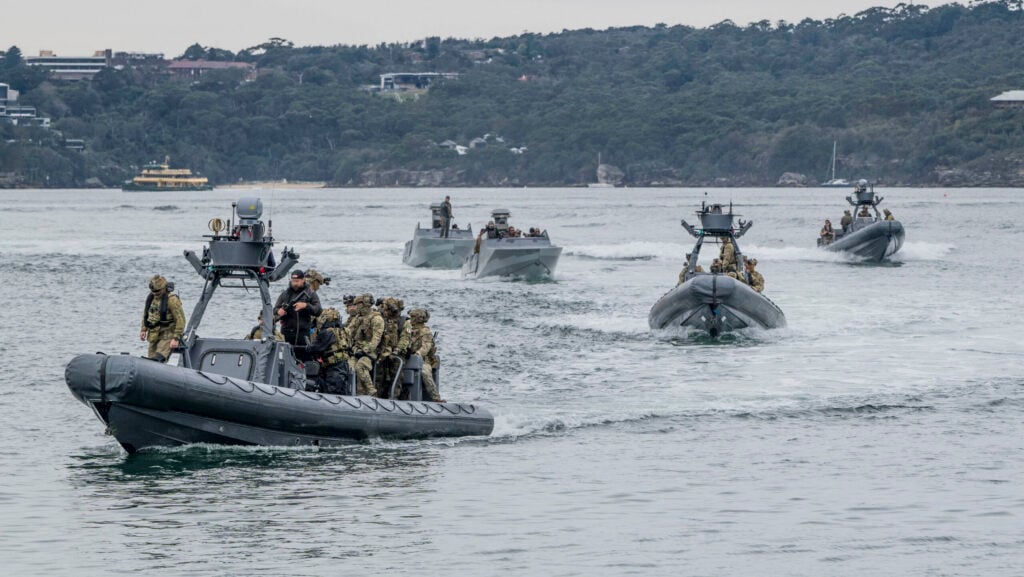
The upgrades are expected include the addition of an open system architecture to facilitate the “integration and aggregation of sensors,” PEO-Maritime Capt. Jared Wyrick said.
The increased integration of open system architectures and advanced sensors reflects an ongoing strategic push for modularity and rapid technological insertion in military platforms.
This upgrade points to a broader trend in defense acquisition towards agile, software-defined systems that can quickly adapt to emerging threats, moving away from slow, monolithic development cycles.
Naval Special Warfare combatant craft will become more adaptable and capable of integrating diverse sensor technologies, enhancing their multi-mission functionality and operational relevance.
- · Defense contractors specializing in open architectures and sensor integration
- · Naval special operations forces
- · Companies offering modular tactical sensor systems
- · Manufacturers of proprietary, closed-architecture combat systems
- · Competitors with slower innovation cycles
- · Legacy defense programs with rigid integration requirements
The combatant craft will achieve enhanced situational awareness and mission flexibility through integrated sensor aggregation.
This move will accelerate the adoption of open-source and modular design principles across other naval and special operations platforms.
Increased interoperability and data sharing among diverse platforms could lead to new doctrines for networked warfare and collaborative special operations.
This signal links to a primary source. Continuum Brief monitors and indexes it as part of the live intelligence stream — we do not republish source content.
Read at Breaking Defense