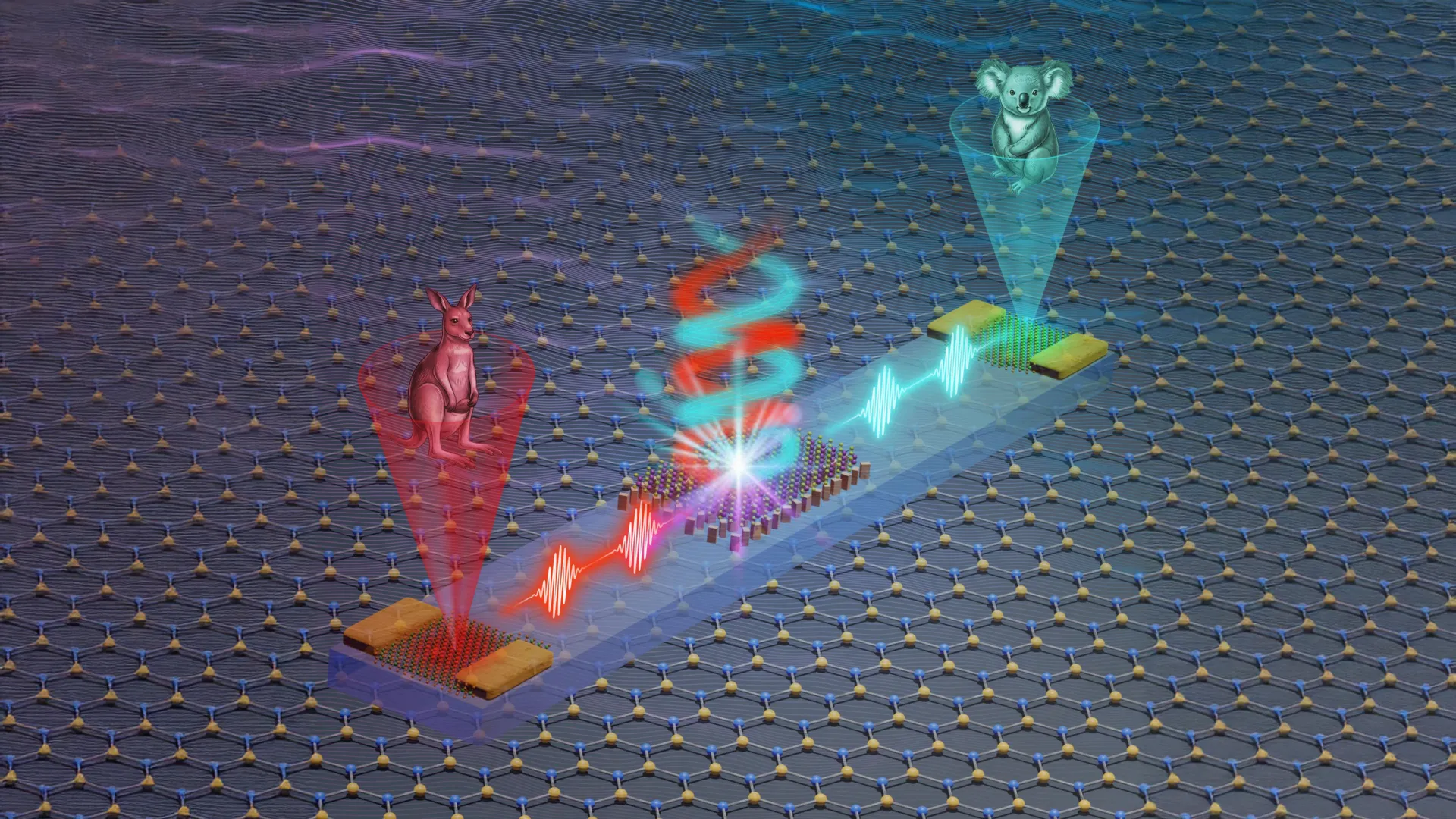
Scientists have created a tiny chip that can generate, steer, and read light-based information all in one device, marking a major leap toward ultra-fast, energy-efficient computing. The breakthrough uses atomically thin materials and nanoscale structures to control a unique quantum property of light called the “valley” degree of freedom, allowing information to be encoded in new ways.
Advances in materials science and nanotechnology are enabling new approaches to computing that were previously theoretical or impractical.
This breakthrough represents a significant step towards fundamentally faster and more energy-efficient computing paradigms, critical for continued AI scaling and quantum advancements.
The ability to generate, steer, and read light-based information on a single chip could replace or augment traditional electronic pathways, leading to denser and more powerful processors.
- · Quantum computing researchers
- · AI hardware developers
- · Semiconductor manufacturers
- · Cloud computing providers
- · Traditional silicon foundries (long-term if not adapted)
- · Energy-intensive data centers (potentially less so)
This chip directly addresses the speed and energy consumption bottlenecks inherent in current computing architectures.
Reduced power consumption and increased speed could accelerate breakthroughs in complex AI models and make quantum computing more feasible outside highly specialized labs.
A fundamental shift to light-based computing could reorganize global compute supply chains and enable entirely new classes of intelligent systems.
This signal links to a primary source. Continuum Brief monitors and indexes it as part of the live intelligence stream — we do not republish source content.
Read at ScienceDaily — Quantum Computing