Niantic Spatial adds USDZ export to Scaniverse to streamline robotics simulation workflows
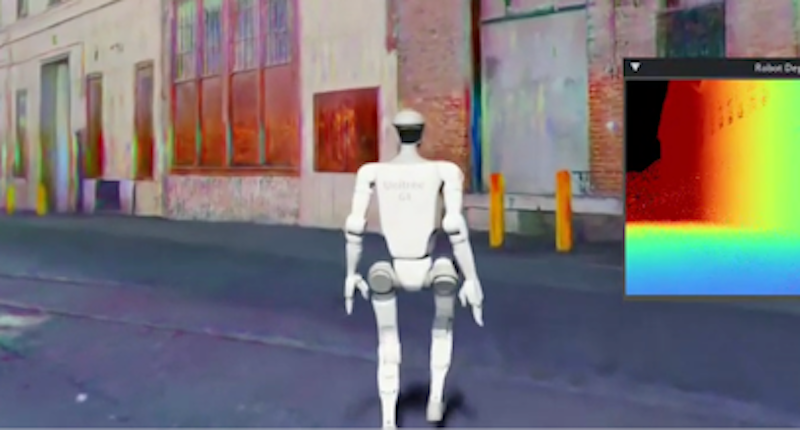
Niantic Spatial has launched USDZ export for its Scaniverse app, enabling robotics developers to convert real-world environments into simulation-ready digital twins for use with Nvidia Isaac Sim. The new capability is designed to help address the long-standing “sim-to-real” gap in robotics, where systems trained in synthetic environments often struggle when deployed in complex, real-world settings. […]
The increasing sophistication of robotics and AI models demands more realistic and efficient simulation environments to close the 'sim-to-real' gap.
This development significantly accelerates the development and deployment of autonomous robots by providing high-fidelity digital twins of real-world environments for rigorous training.
The ability to easily port real-world scanned environments into robotics simulators like Nvidia Isaac Sim streamlines robotic development workflows and reduces the gap between simulated and real-world performance.
- · Robotics developers
- · Autonomous robotics companies
- · Nvidia
- · Niantic Spatial
- · Companies relying solely on manual environment creation for simulations
Faster iteration cycles and improved performance for autonomous robots in real-world scenarios due to better simulation training.
Increased adoption of simulation-first approaches in robotics development, leading to more robust and commercially viable robotic systems.
Accelerated development of general-purpose robots and AI agents capable of operating effectively in complex, unstructured environments.
This signal links to a primary source. Continuum Brief monitors and indexes it as part of the live intelligence stream — we do not republish source content.
Read at Robotics & Automation News