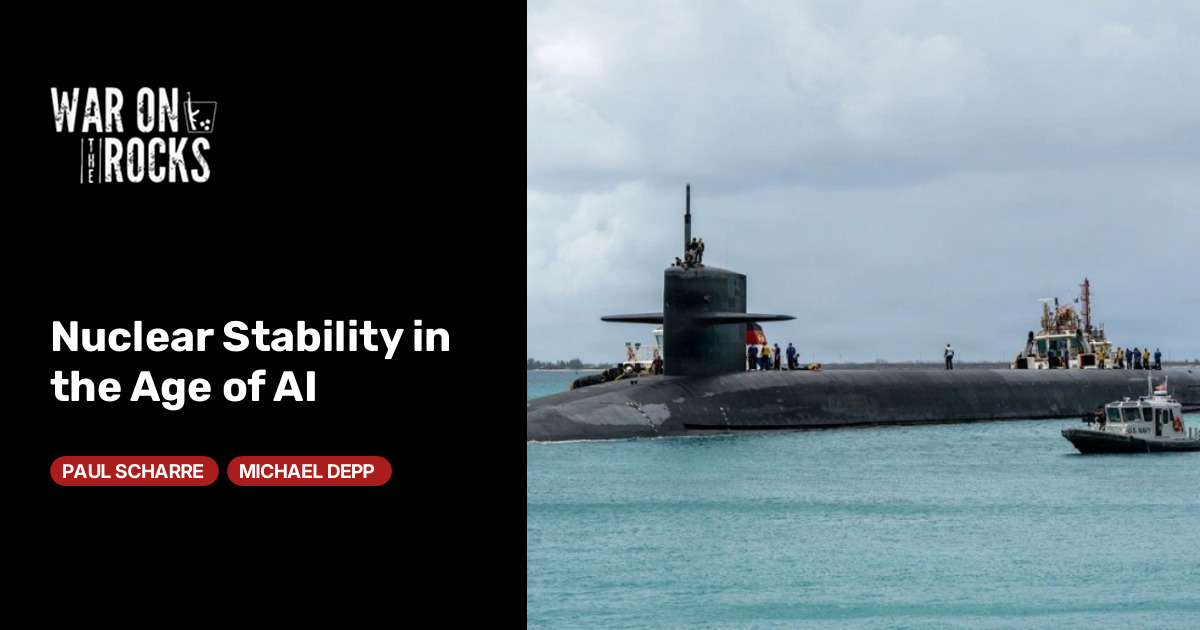
In 2024, Paul Scharre and Michael Depp wrote, “Artificial Intelligence and Nuclear Stability,” where they argued integrating artificial intelligence into the nuclear chain of command presents both opportunities and risks. Two years later, as AI becomes increasingly integrated into military systems and processes, we asked them to revisit their arguments. Image: Senior Airman Jason Wiese via Wikimedia CommonsIn 2024, you argued that integrating artificial intelligence into the nuclear chain of command presents both opportunities and risks. Where does that integration stand today? Is nuclear AI a
The ongoing rapid integration of AI into military systems necessitates a timely reassessment of its implications for nuclear stability, building on prior foundational analysis.
The intersection of AI with nuclear command and control presents significant opportunities for enhanced deterrence but also introduces new, complex risks for global strategic stability.
The discussion around nuclear AI has moved from theoretical possibilities to practical integration considerations, demanding updated policy and strategic frameworks.
- · Defence Tech innovators
- · Global security researchers
- · Nations with advanced AI capabilities
- · Nations without robust AI safeguards
- · Traditional nuclear strategists
- · International arms control efforts
Increased debate and research into AI's role in strategic decision-making and nuclear command chains.
Development of new international norms and treaties to govern AI in nuclear weapons systems.
Potential for a new arms race focused on AI-enhanced strategic capabilities, altering global power dynamics.
This signal links to a primary source. Continuum Brief monitors and indexes it as part of the live intelligence stream — we do not republish source content.
Read at War on the Rocks