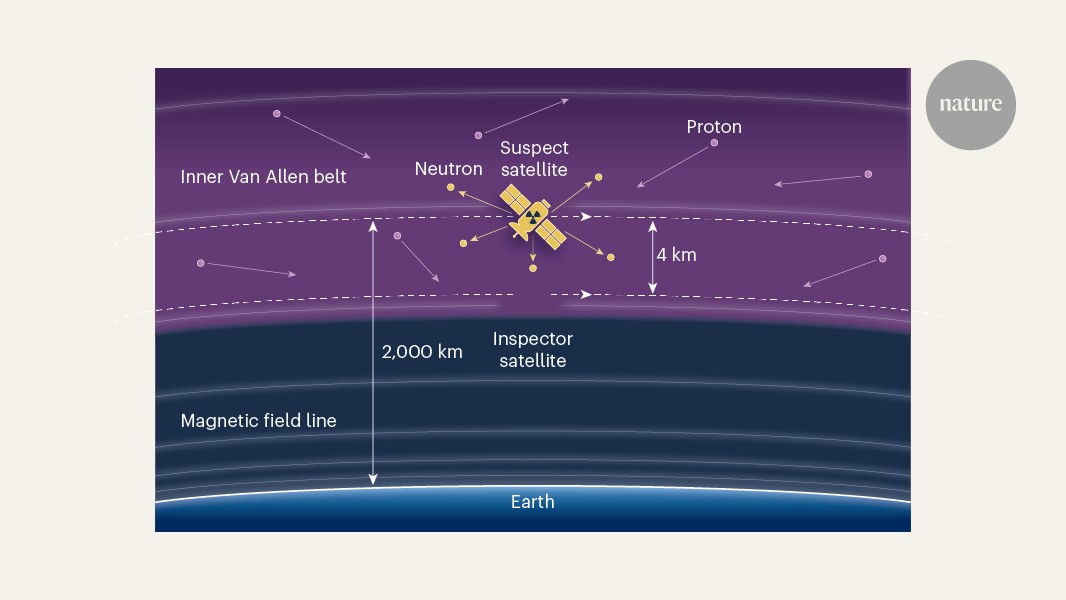
Nature, Published online: 08 July 2026; doi:10.1038/d41586-026-01944-4 A nuclear weapon orbiting Earth would emit neutrons through its interactions with the planet’s space radiation environment, and these could be detected by satellites.
Scientific research has identified a method to detect orbital nuclear weapons, suggesting a potential breakthrough in space-based vigilance. This capability emerges as geopolitical tensions are rising and space is increasingly viewed as a domain for military operations.
This development could significantly alter strategic stability by providing a means to verify compliance with space arms control treaties or detect clandestine deployments. It introduces a new layer of transparency and potentially deterrence in the militarization of space.
The ability to track orbital nuclear weapons shifts the paradigm from unmonitorable deployment to potentially detectable presence, making their use or placement more attributable and thus less likely. It creates pressure for new norms and treaties around space weaponization.
- · Satellite manufacturers
- · Spacefaring nations with advanced surveillance capabilities
- · International arms control advocates
- · Intelligence agencies
- · Nations seeking clandestine space-based deterrence
- · Proliferators of space weapons
- · Operators of 'dark' space assets
This research provides a scientific basis for developing satellite constellations specifically designed for nuclear weapon detection in orbit.
The existence of such detection capabilities could spur new arms race dynamics in space, focusing on counter-detection or anti-satellite measures.
It might lead to international agreements or treaties for space-based weapon verification, establishing new legal frameworks for space security.
This signal links to a primary source. Continuum Brief monitors and indexes it as part of the live intelligence stream — we do not republish source content.
Read at Nature — Latest Research