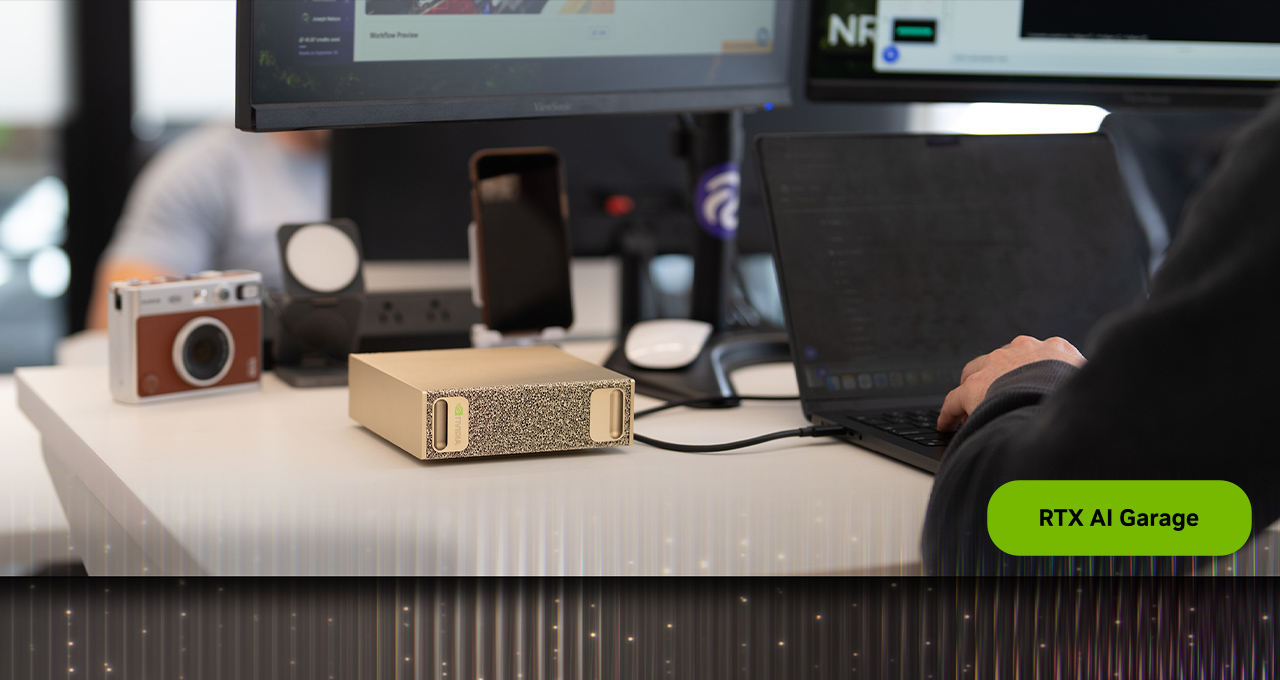
Personal agents are exploding in popularity, with open source projects like OpenClaw and Hermes seeing rapid adoption by AI developer communities on GitHub. Built to adapt to individual preferences and workflows, these agents can interact with applications, generate content, automate repetitive processes and manage multi-step tasks — all while running locally on device. Today at […]
The rapid development and adoption of open-source agentic AI projects indicate a maturing ecosystem ready for broader deployment on personal hardware.
The move by NVIDIA to support local AI agents on RTX PCs signifies a significant step towards democratizing powerful AI capabilities, reducing reliance on cloud infrastructure for many personal and professional tasks.
Local devices (PCs) become more capable of running sophisticated AI agents, shifting some AI processing from the cloud to the edge and potentially empowering individual users with greater data privacy and autonomy.
- · NVIDIA
- · PC Manufacturers
- · AI Developers (open source)
- · Individual Users
- · Cloud AI providers (for basic tasks)
- · Legacy software companies (if not adapting)
More powerful and personalized AI agents become accessible to a wider user base on their personal devices.
The proliferation of local AI agents could lead to new types of privacy-preserving applications and workflows.
Increased local AI processing might eventually diminish the necessity for constant internet connectivity for certain advanced AI functionalities, leading to more resilient computing environments.
This signal links to a primary source. Continuum Brief monitors and indexes it as part of the live intelligence stream — we do not republish source content.
Read at NVIDIA Blog