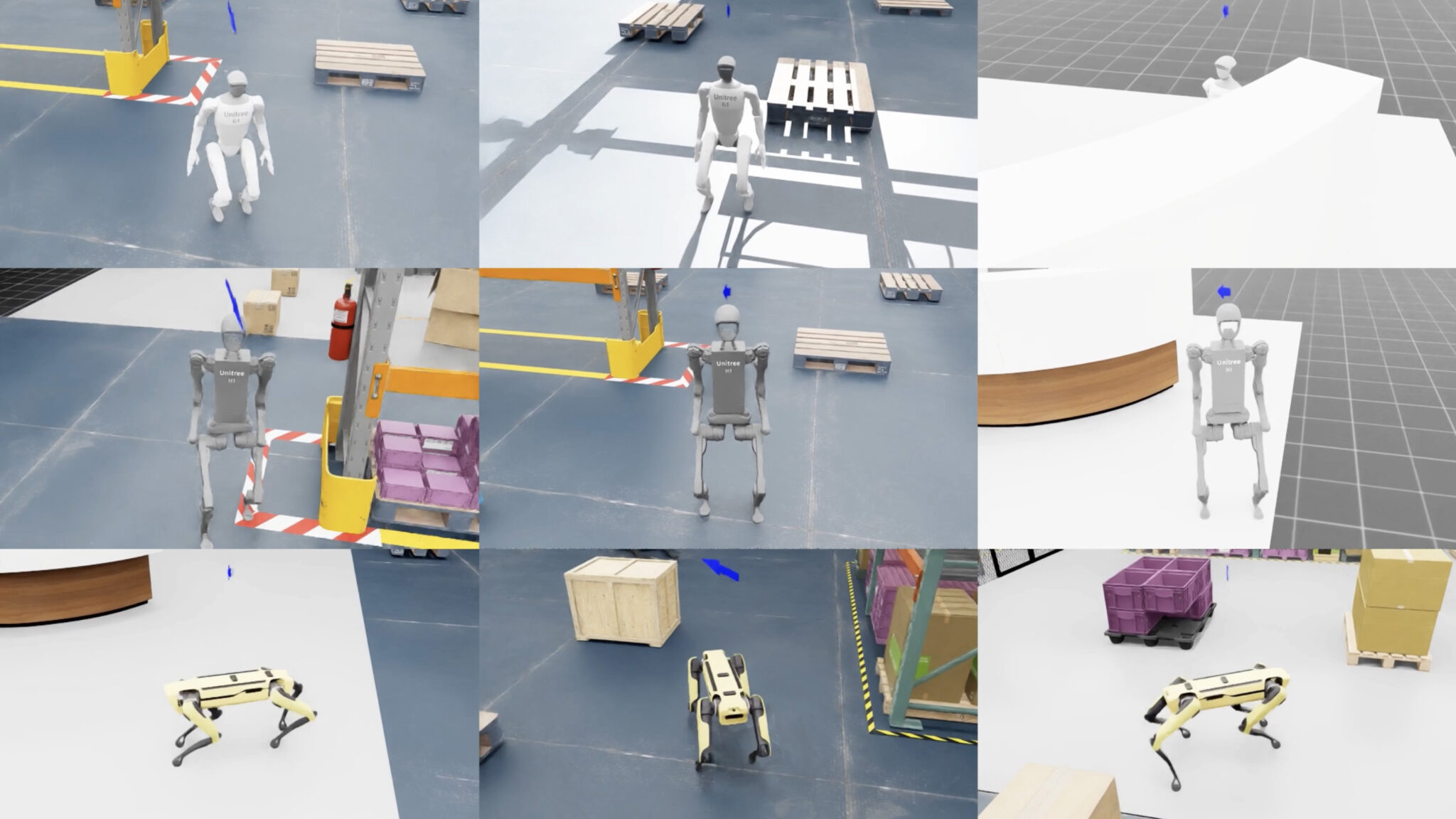
Robotics is entering a new phase: moving from controlled demos and scripted automation toward generalizable, reliable embodied autonomy in the real world. At the International Conference on Robotics and Automation (ICRA), eight of NVIDIA Research’s 28 accepted papers show how simulation-to-real transfer is becoming a foundation for that shift, helping robots perceive, reason, plan and […]
The rapid advancements in AI models and simulation technologies, combined with increasing investment in robotics, are converging to enable more sophisticated transfer from virtual to physical environments.
Achieving reliable simulation-to-real transfer is a critical step for scaling robotics beyond controlled environments, opening up new economic and industrial applications.
The ability to develop and test robotic systems in simulation with high fidelity to real-world performance accelerates development cycles and reduces the cost and complexity of deployment.
- · NVIDIA
- · Robotics Companies
- · Logistics and Manufacturing Sectors
- · AI Software Developers
- · Companies reliant on manual labor for hazardous or repetitive tasks
- · Firms slow to adopt simulation-driven robotics development
Accelerated development and widespread deployment of embodied AI in various industries.
Increased demand for advanced simulation platforms and digital twin technologies across industrial sectors.
Reconfiguration of labor markets as robots take on more complex and generalizable tasks, necessitating new human-robot interaction paradigms.
This signal links to a primary source. Continuum Brief monitors and indexes it as part of the live intelligence stream — we do not republish source content.
Read at NVIDIA Blog