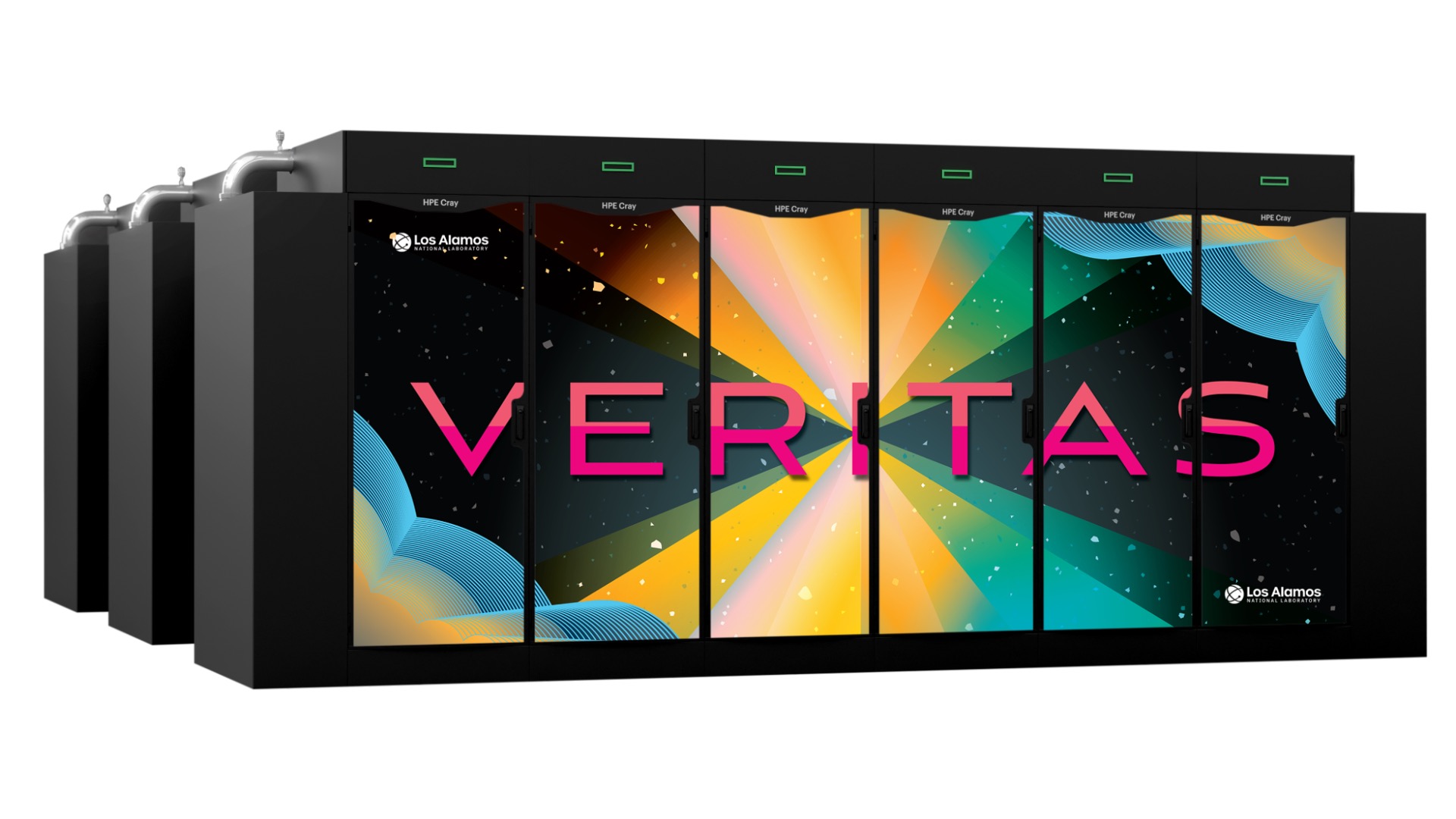
Mission, Vision and Veritas — new Los Alamos National Laboratory (LANL) supercomputers to be built with HPE and NVIDIA — are tapping NVIDIA Vera CPUs to accelerate scientific discovery, unlocking agentic AI for science. The supercomputers will use the HPE Cray Supercomputing GX5000 architecture with the NVIDIA Vera Rubin platform, combining NVIDIA Vera CPUs, NVIDIA […]
The continuous advancements in AI and high-performance computing necessitate more powerful and specialized hardware, pushing for new CPU architectures designed for agentic AI workloads.
This development indicates a significant push toward highly autonomous AI systems for scientific discovery, potentially accelerating breakthroughs in various fields and establishing new paradigms for research.
The deployment of NVIDIA Vera CPUs at national laboratories signals a shift towards specialized hardware for complex agentic AI, moving beyond general-purpose computing for cutting-edge scientific applications.
- · NVIDIA
- · Los Alamos National Laboratory
- · HPE
- · Scientific Research
- · General Purpose CPU Manufacturers (for specialized AI)
- · Traditional Scientific Computing Methods
The new supercomputers will enable scientific researchers to deploy sophisticated agentic AI models for discovery and simulation.
Accelerated scientific breakthroughs powered by agentic AI could lead to new industries and deeper understanding in critical areas like materials science or energy.
The success of agentic AI in scientific discovery could catalyze its adoption across other complex problem domains, increasing demand for similar specialized compute infrastructure globally.
This signal links to a primary source. Continuum Brief monitors and indexes it as part of the live intelligence stream — we do not republish source content.
Read at NVIDIA Blog