Oak Ridge National Lab reveals ‘hidden workforce’ behind AI-powered research facilities
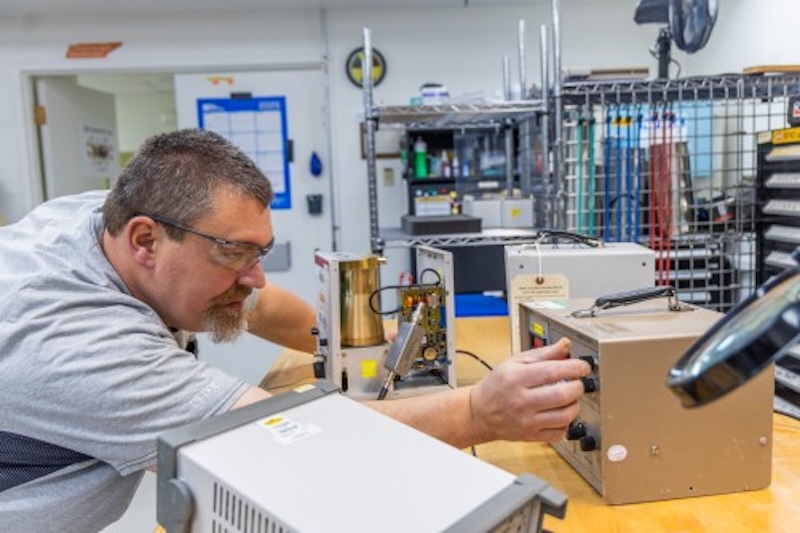
By Clint Keaton Behind every self-driving laboratory at the US Department of Energy’s Oak Ridge National Laboratory is a team most people never see. Facilities and Operations (F&O) workers are building and maintaining the infrastructure that makes autonomous science possible. Autonomous labs run with little human intervention. Instead, they rely on robotics, sensors and automation […]
The increasing maturity of AI and robotics is enabling the automation of scientific research, pushing the boundaries of traditional laboratory operations.
This development signals a significant leap in research efficiency and discovery potential, accelerating scientific progress across various fields.
Scientific research, traditionally human-intensive, is becoming increasingly automated and thus faster, more scalable, and potentially more precise, altering the allocation of human capital in scientific endeavors.
- · Scientific research institutions
- · AI/Robotics developers
- · High-tech manufacturing
- · Pharmaceuticals and materials science
- · Manual laboratory technicians
- · Traditional research methods dependent on human throughput
Automated laboratories will accelerate scientific discovery and material innovation.
This acceleration could lead to breakthroughs in medicine, energy, and AI itself, further reducing the time to market for new technologies.
The role of human scientists shifts from manual experimentation to designing experiments, interpreting data, and guiding AI systems, necessitating new educational frameworks.
This signal links to a primary source. Continuum Brief monitors and indexes it as part of the live intelligence stream — we do not republish source content.
Read at Robotics & Automation News