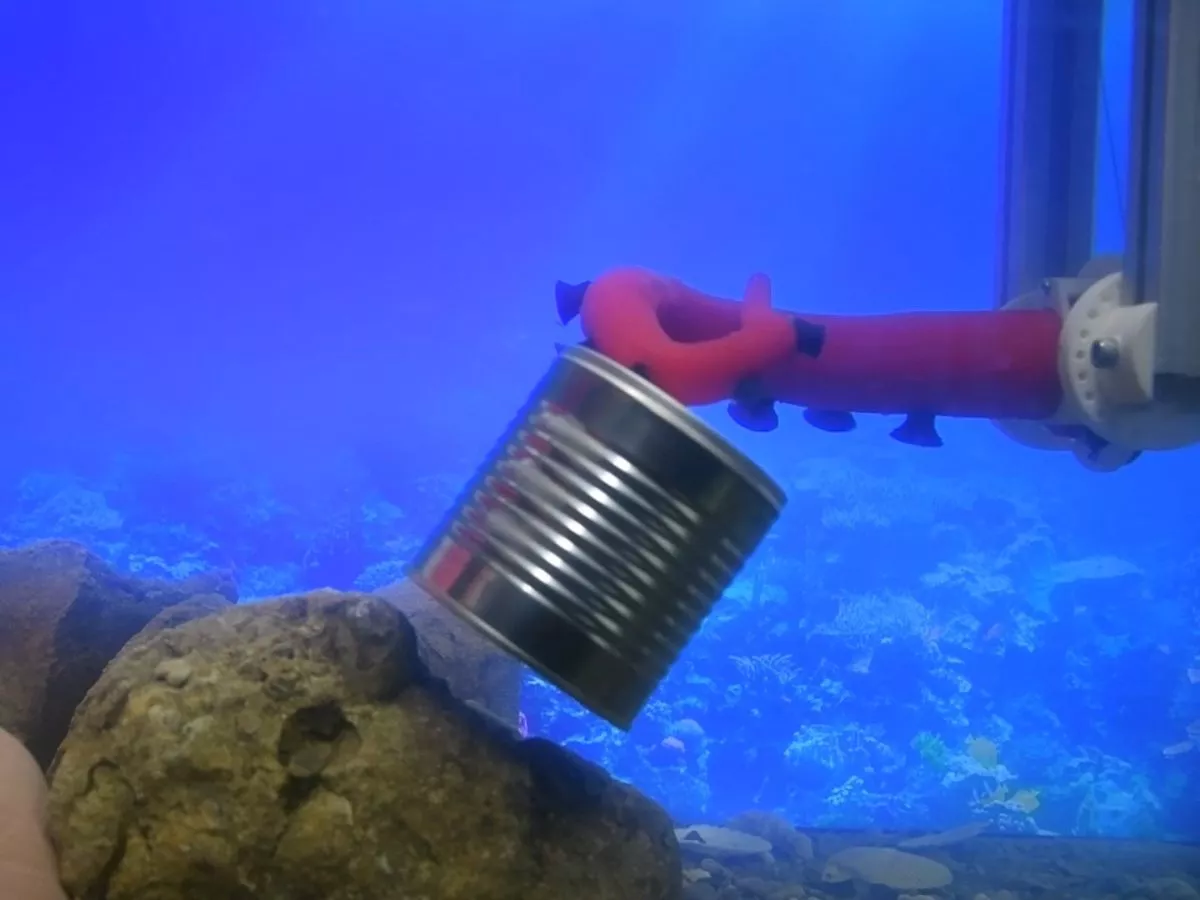
Robots exploring the ocean floor today use pre-programmed movements, centralized processors, and rigid structures to do their work. But the sea is unpredictable, and that architecture struggles wherever currents shift, visibility drops, or terrain changes without warning. Now, researchers at the Italian Institute of Technology (IIT) have taken a very different approach to sidestep all of that – one 500 million years in the making. Continue Reading Category: Robotics , Engineering Tags: Italian Institute of Technology , Octopus , Biomimicry , ARM
This research builds on recent advancements in robotics and biomimicry, driven by the increasing need for autonomous systems to operate in unstructured and unpredictable environments like the deep sea.
This breakthrough represents a significant step towards more adaptable and resilient robotic exploration and manipulation, crucial for industries ranging from marine biology to subsea infrastructure.
The shift from pre-programmed, rigid robotic movements to bio-inspired, sensor-rich, and distributed intelligence fundamentally changes how robots can interact with dynamic and unknown environments.
- · Ocean exploration sector
- · Robotics research institutions
- · Biomimicry engineering firms
- · Subsea infrastructure maintenance
- · Developers of rigid, pre-programmed underwater robots
- · Traditional subsea inspection methods
More efficient and effective exploration of deep-sea environments becomes possible.
Reduced human risk and increased data acquisition in hazardous underwater operations.
New commercial opportunities emerge for advanced, bio-inspired autonomous underwater vehicles capable of complex tasks.
This signal links to a primary source. Continuum Brief monitors and indexes it as part of the live intelligence stream — we do not republish source content.
Read at New Atlas — Robotics