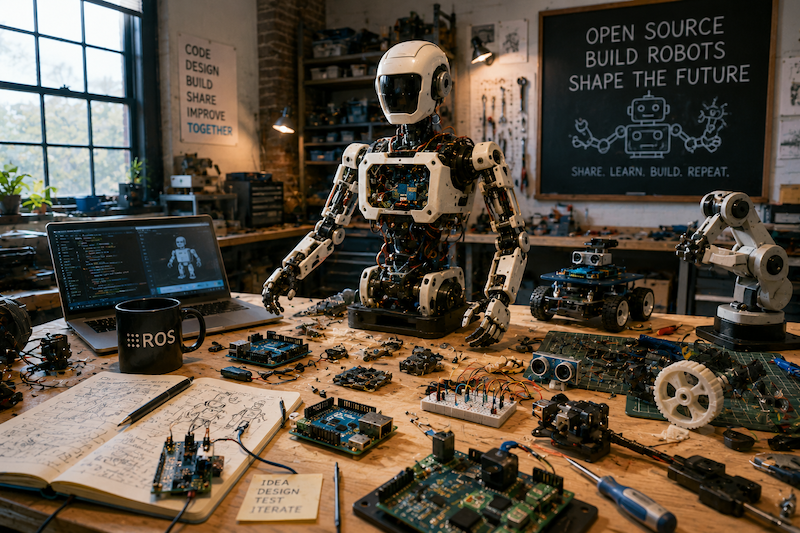
Most discussions about open-source robotics focus on software. The Robot Operating System (ROS) has become the best-known example, providing developers with a common framework for building and operating robots. Yet software is only part of the story. Over the past two decades, a growing ecosystem of open-source hardware platforms has dramatically lowered the barriers to […]
The increased maturity of open-source software like ROS, coupled with accessible open-source hardware platforms, has collectively lowered the barrier to entry for robotics development, making this a pivotal moment for democratized robot building.
Open-source hardware for robotics fosters innovation and reduces development costs, potentially accelerating the deployment of robotic solutions across various sectors and reducing dependence on proprietary systems.
The accessibility of tools and components for robot construction shifts from specialized, high-cost domains to more widely available and customizable platforms, enabling broader participation in robotics development.
- · SMEs in robotics
- · Educational institutions
- · DIY robotics community
- · Developing economies
- · Proprietary robotics hardware manufacturers
- · High-cost specialized robotics integrators
More widespread adoption of custom-built robotic solutions in niche applications.
Increased competition and innovation in the robotics market due to a larger pool of developers and lower entry barriers.
The potential for new, unforeseen applications of robotics as more diverse groups gain the ability to create their own robotic systems, impacting various industries and daily life.
This signal links to a primary source. Continuum Brief monitors and indexes it as part of the live intelligence stream — we do not republish source content.
Read at Robotics & Automation News