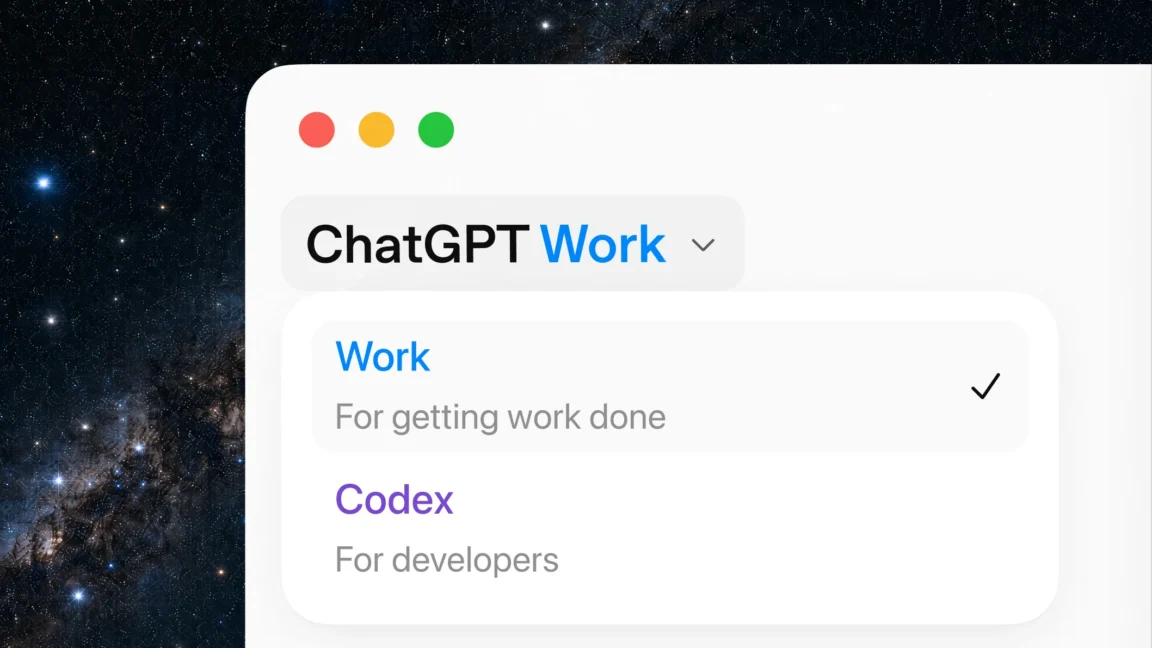
Rebranded Codex promises independent workflows that can run "for hours if needed."
OpenAI is pushing aggressively into autonomous agent capabilities, capitalizing on rapid advancements in large language models to automate complex workflows.
This development indicates a tangible step towards AI systems performing multi-stage, sustained tasks, fundamentally altering white-collar work and SaaS business models.
AI tools will move beyond simple task execution to managing entire workflows independently, reducing the need for human intervention in many processes.
- · OpenAI
- · Early adopter enterprise software companies
- · Knowledge workers capable of directing complex AI agents
- · SaaS companies with undifferentiated workflow tools
- · Traditional business process outsourcing firms
- · Workers performing routine, multi-step digital tasks
Enterprise adoption of AI agents will accelerate, reducing operational costs and increasing efficiency in many industries.
The competitive landscape for AI companies will intensify as they race to build more robust and versatile autonomous agents, potentially leading to platform consolidation.
The definition of 'work' and 'employment' will continue to evolve, requiring significant retraining and societal adjustments as AI takes on increasingly complex tasks.
This signal links to a primary source. Continuum Brief monitors and indexes it as part of the live intelligence stream — we do not republish source content.
Read at Ars Technica — AI