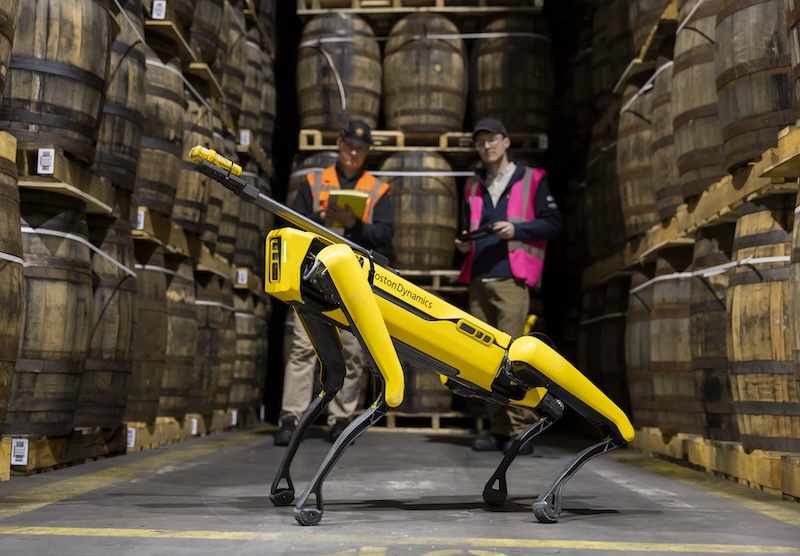
By Andrew Hamilton, head of the Digital Process Manufacturing Centre (DPMC) at the National Manufacturing Institute Scotland (NMIS) Manufacturing facilities today are sprawling, interconnected environments where equipment operates continuously and processes stretch across large physical footprints. From factory floors and plant rooms to service corridors and external assets, engineering teams need clear visibility across areas […]
The article highlights the increasing adoption of autonomous robots like Boston Dynamics Spot, alongside advancements in digital manufacturing, making factory inspections and industrial automation more efficient and cost-effective.
This development underscores the ongoing shift towards greater automation in industrial settings, which will significantly impact labour markets, operational efficiency, and capital expenditure decisions for manufacturers worldwide.
The operational paradigm of factory inspections and manufacturing facility management shifts from predominantly human-centric to increasingly autonomous, improving safety, precision, and data collection.
- · Robot manufacturers (e.g., Boston Dynamics)
- · Manufacturing companies adopting autonomous inspection systems
- · Automation software developers
- · Digital manufacturing service providers
- · Industrial inspection service companies relying solely on human labour
- · Workforces engaged in repetitive, hazardous inspection tasks
Increased efficiency and reduced operational costs for manufacturers through autonomous systems.
Demand for new skill sets in robot maintenance, programming, and data analysis in manufacturing.
Accelerated development of more sophisticated, multi-functional autonomous robots for broader industrial applications.
This signal links to a primary source. Continuum Brief monitors and indexes it as part of the live intelligence stream — we do not republish source content.
Read at Robotics & Automation News