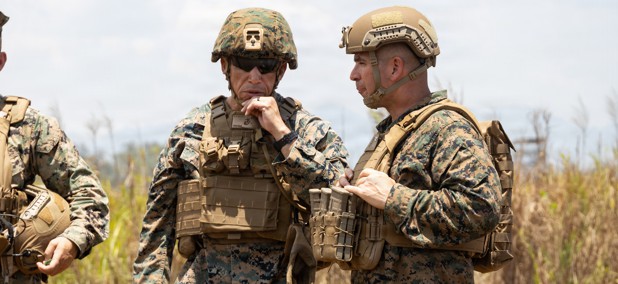
3rd MLR basically did exactly what it was designed to do,” Col. Gabe Diana said.
The Philippines is a key strategic location in the Indo-Pacific, and ongoing tensions with China are accelerating the development and deployment of advanced defensive capabilities by allies.
The maturation of the Marine Littoral Regiment signifies a concrete advancement in distributed maritime operations, fundamentally altering regional power projection and deterrence strategies.
Traditional large-scale naval engagements are increasingly complemented by agile, multi-domain units, making littoral zones more contested and demanding new military doctrines.
- · US Marine Corps
- · Philippines armed forces
- · Defense contractors focused on expeditionary warfare
- · Forces reliant on traditional large-scale power projection in contested littoral
Increased emphasis on rapid deployment, anti-access/area denial (A2/AD) capabilities, and persistent presence in contested maritime environments.
Accelerated development and adoption of similar 'littoral' or distributed operational units by other nations and heightened investment in relevant technologies like unmanned systems and mobile anti-ship missiles.
A shift in regional military balance towards more decentralized, networked defense postures, potentially dampening large-scale conventional conflict but increasing the risk of localized skirmishes and proxy engagements.
This signal links to a primary source. Continuum Brief monitors and indexes it as part of the live intelligence stream — we do not republish source content.
Read at Defense One