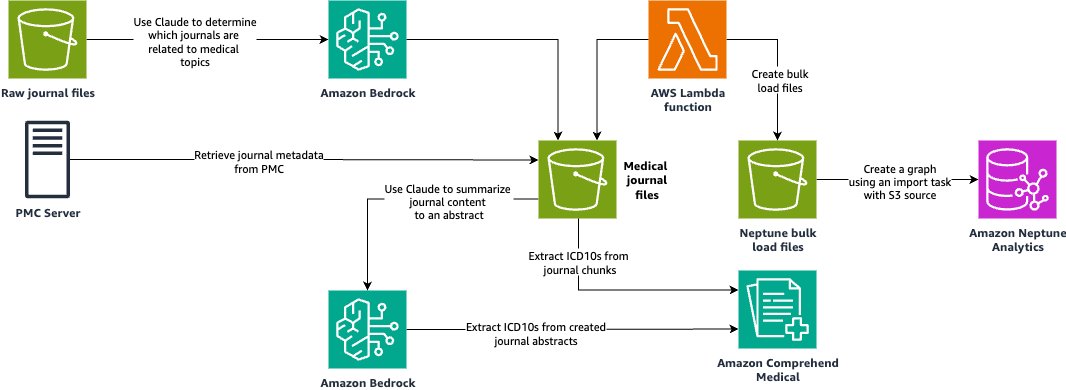
In this post, we explore how Graph-based Retrieval Augmented Generation (GraphRAG) is transforming scientific research by combining graph databases with generative AI. With this approach, you can accelerate discovery processes without compromising scientific integrity.
The combination of mature graph database technologies and advanced generative AI models is now enabling practical applications in complex scientific domains like pharmaceutical research.
This development accelerates the drug discovery process, potentially reducing costs and time to market for new therapies, which has significant economic and health implications.
The ability to rapidly synthesize and query vast, interconnected scientific literature with AI-driven insights fundamentally changes how research hypotheses are generated and validated.
- · Pharmaceutical companies
- · Biotech startups
- · Generative AI developers
- · Graph database providers
- · Traditional drug discovery methods
- · Companies slow to adopt AI in R&D
Increased efficiency in pharmaceutical R&D leads to faster drug development cycles and potentially more personalized medicine approaches.
A surge in novel therapeutic discoveries could shift market leadership within the pharmaceutical sector and improve global health outcomes.
The success in pharma could spur widespread adoption of GraphRAG across other scientific fields, leading to a general acceleration of scientific innovation.
This signal links to a primary source. Continuum Brief monitors and indexes it as part of the live intelligence stream — we do not republish source content.
Read at AWS Machine Learning Blog