Presentation: Designing AI Platforms for Reliability: Tools for Certainty, Agents for Discovery
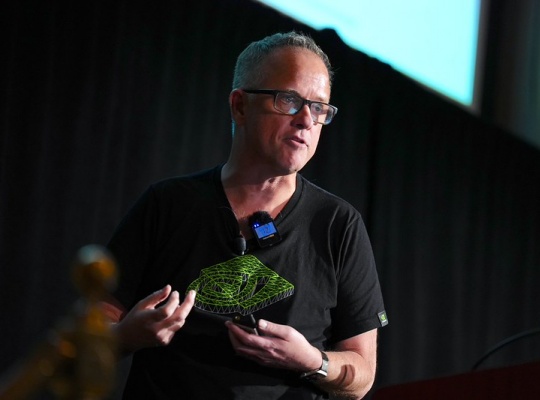
Aaron Erickson discusses the evolution of AI workflows, shifting from "vibe checking" to building reliable, multi-agent frameworks. He explains how to combine deterministic software guardrails with agentic discovery, optimize agent hierarchies, leverage time-series foundation models, and implement rigorous evaluation pyramids to ensure architecture scales effectively in production. By Aaron Erickson
The proliferation of AI models in production environments is driving an urgent need for robust operational frameworks, moving beyond experimental phases to reliable deployment.
Reliability in AI systems is a critical bottleneck for scaling adoption and integrating AI into core business processes, impacting efficiency and trust.
The focus in AI development is shifting from pure model performance to the architectural and operational resilience required for real-world, scalable, and autonomous AI applications.
- · Platforms providing AI operational reliability tools
- · Enterprises deploying complex AI systems
- · AI software and infrastructure developers
- · Organizations relying on 'vibe checks' for AI deployment
- · AI solutions lacking robust evaluation frameworks
- · Companies struggling with AI system scalability
Increased enterprise adoption of multi-agent AI systems due to improved reliability and predictability.
Consolidation of AI platform providers that can offer comprehensive reliability and governance tooling.
Enhanced regulatory scrutiny and potential for new standards around AI reliability and safety in critical applications.
This signal links to a primary source. Continuum Brief monitors and indexes it as part of the live intelligence stream — we do not republish source content.
Read at InfoQ