Presentation: From Hype to Strong Foundations: What the Rise, Fall and Resurgence of Agents Can Teach Us About Outlasting the Cycle
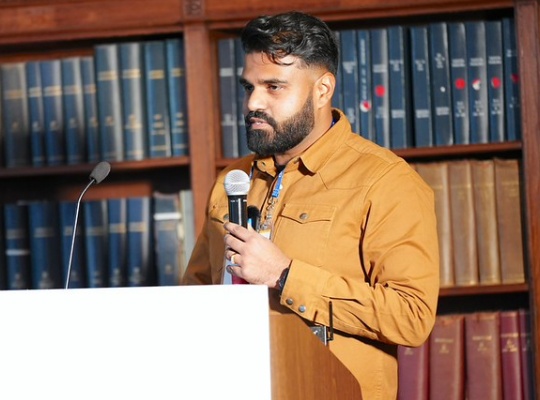
Aditya Kumarakrishnan explains how to move past the "amnesia phase" of AI. He shares a blueprint for engineering leaders to build modular agent frameworks using CoALA, leverage decades of process science for scalable workflows, and "terraform" legacy environments into robust, event-sourced artifacts capable of handling unpredictable, cross-functional agent demands. By Aditya Kumarakrishnan
The AI industry is moving past initial hype into practical, scalable implementation, making discussions around robust agent frameworks and overcoming 'amnesia phase' critical for sustained progress.
This presentation provides a blueprint for engineering leaders to build stable AI agent architectures, crucial for integrating autonomous systems into enterprise workflows and deriving tangible value from AI investments.
The focus shifts from experimenting with standalone AI models to constructing modular, event-sourced agent frameworks capable of handling complex, cross-functional demands, thereby professionalizing AI deployment.
- · Software engineers specializing in agent frameworks
- · Enterprises adopting modular AI architectures
- · AI platform providers
- · Companies relying on ad-hoc AI solutions
- · Legacy systems unable to integrate event-sourced architectures
- · AI initiatives without strong architectural foundations
Companies begin to successfully deploy and scale AI agents across diverse business functions.
Increased efficiency and automation in white-collar tasks, leading to restructuring of human roles.
Emergence of new business models built entirely on robust, interconnected networks of AI agents.
This signal links to a primary source. Continuum Brief monitors and indexes it as part of the live intelligence stream — we do not republish source content.
Read at InfoQ