Presentation: Moving Mountains: Migrating Legacy Code in Weeks instead of Years
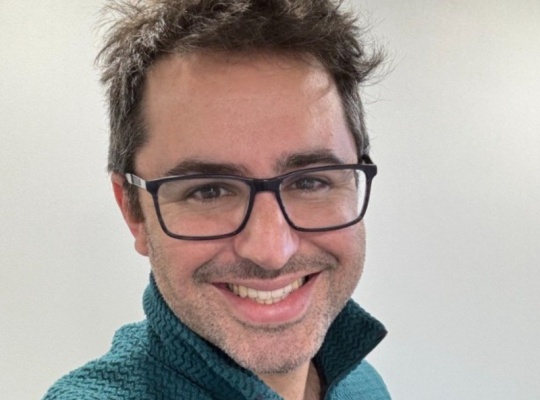
David Stein shares how to rethink large-scale architectural migrations using AI. He discusses ServiceTitan's "assembly line" pattern, explaining how decomposing legacy codebase refactoring into standardized tasks can achieve massive parallelization. He highlights the critical role of programmatically rigid validation loops to eliminate LLM hallucinations and accelerate engineering agility. By David Stein
The rapid advancement of large language models and AI agents is creating new opportunities to automate complex software engineering tasks, making large-scale refactoring more feasible.
This development indicates a significant accelerator for enterprise modernization, potentially reducing technical debt and increasing agility across industries with legacy systems.
Legacy code migration, traditionally a multi-year, resource-intensive effort, can now be re-envisioned as a highly parallelized, AI-assisted process completed in weeks.
- · Enterprise software engineering teams
- · Companies with significant technical debt
- · AI agent developers
- · Cloud migration service providers
- · Traditional consulting firms for legacy modernization
- · Monolithic software vendors
Enterprises can more quickly re-platform, adopt new technologies, and compete more effectively.
Reduced barriers to entry for new AI-driven business models that require modern, flexible architectures.
A potential shift in talent requirements for software engineers, moving from manual refactoring to AI system supervision and validation.
This signal links to a primary source. Continuum Brief monitors and indexes it as part of the live intelligence stream — we do not republish source content.
Read at InfoQ