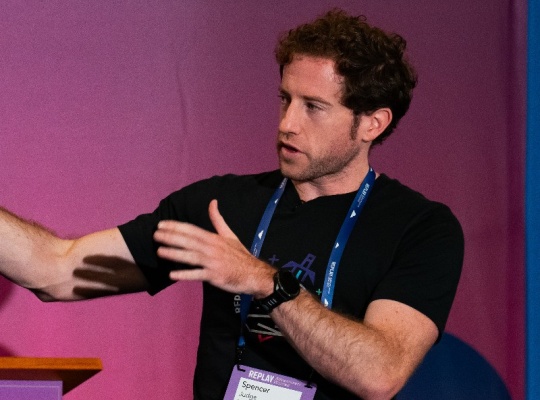
Spencer Judge discusses the architectural pattern of building a shared core in Rust with language-specific layers on top. Drawing from his work on Temporal's SDKs, he shares lessons on navigating FFI boundaries, bridging async concepts, and managing memory safely. He explains the limitations of native extensions and how emerging tech like WebAssembly can streamline cross-language architecture. By Spencer Judge
The increasing complexity and performance demands of modern software, coupled with the need for interoperability across diverse language ecosystems, are driving renewed interest in efficient polyglot development strategies like those offered by Rust and WebAssembly.
This development path signifies a maturation of software architecture towards highly performant, memory-safe, and cross-platform core services, impacting infrastructure longevity and developer efficiency across various industries.
The focus is shifting towards building foundational software components in systems languages like Rust, with lightweight FFI layers, potentially reducing reliance on single-language stacks and improving overall system reliability and performance.
- · Rust developers
- · Companies building cross-platform SDKs
- · WebAssembly ecosystem
- · High-performance computing sectors
- · Monolithic, single-language application developers
- · Legacy FFI/interop solutions
Increased adoption of Rust for foundational components in polyglot applications to enhance performance and safety.
A broader trend towards modular, language-agnostic software architectures, fueled by the success of Rust and WebAssembly in solving cross-language challenges.
The acceleration of new cross-ecosystem tools and frameworks, further blurring the lines between traditionally separate development environments and fostering a more integrated, high-performance software landscape.
This signal links to a primary source. Continuum Brief monitors and indexes it as part of the live intelligence stream — we do not republish source content.
Read at InfoQ