Presentation: Trustworthy Productivity: Securing AI-Accelerated Development
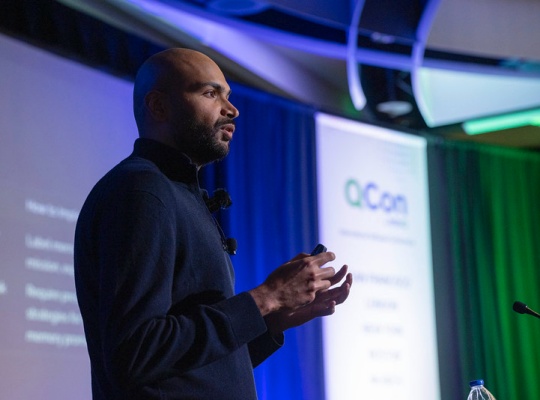
Sriram Madapusi Vasudevan discusses industry-converging patterns for securing autonomous AI agents in production. He explains the critical vulnerabilities hidden inside the ReAct loop across context, reasoning, and tool execution. He shares how to mitigate risks like memory poisoning and rogue tool execution using defense-in-depth strategies, LLM-as-a-judge critics, and MAESTRO threat modeling. By Sriram Madapusi Vasudevan
As AI development accelerates, particularly with autonomous agents, the need for robust security frameworks to prevent critical vulnerabilities is becoming paramount.
This highlights the immediate and growing imperative to secure AI systems, especially those with autonomous capabilities, as their integration into critical infrastructure and workflows increases.
The focus is shifting from general AI security to specific vulnerabilities within autonomous agent architectures, requiring tailored defense strategies and threat modeling.
- · Cybersecurity firms specializing in AI/ML
- · Developers of secure AI agent frameworks
- · Enterprises adopting secure AI practices
- · Organizations with immature AI security postures
- · Developers neglecting AI agent security
- · Attackers exploiting AI system vulnerabilities
Increased investment and R&D into AI agent security tools and methodologies.
New standards and regulations emerging for the secure development and deployment of autonomous AI systems.
Enhanced trust and adoption of AI agents across sensitive industries due to improved security assurances.
This signal links to a primary source. Continuum Brief monitors and indexes it as part of the live intelligence stream — we do not republish source content.
Read at InfoQ