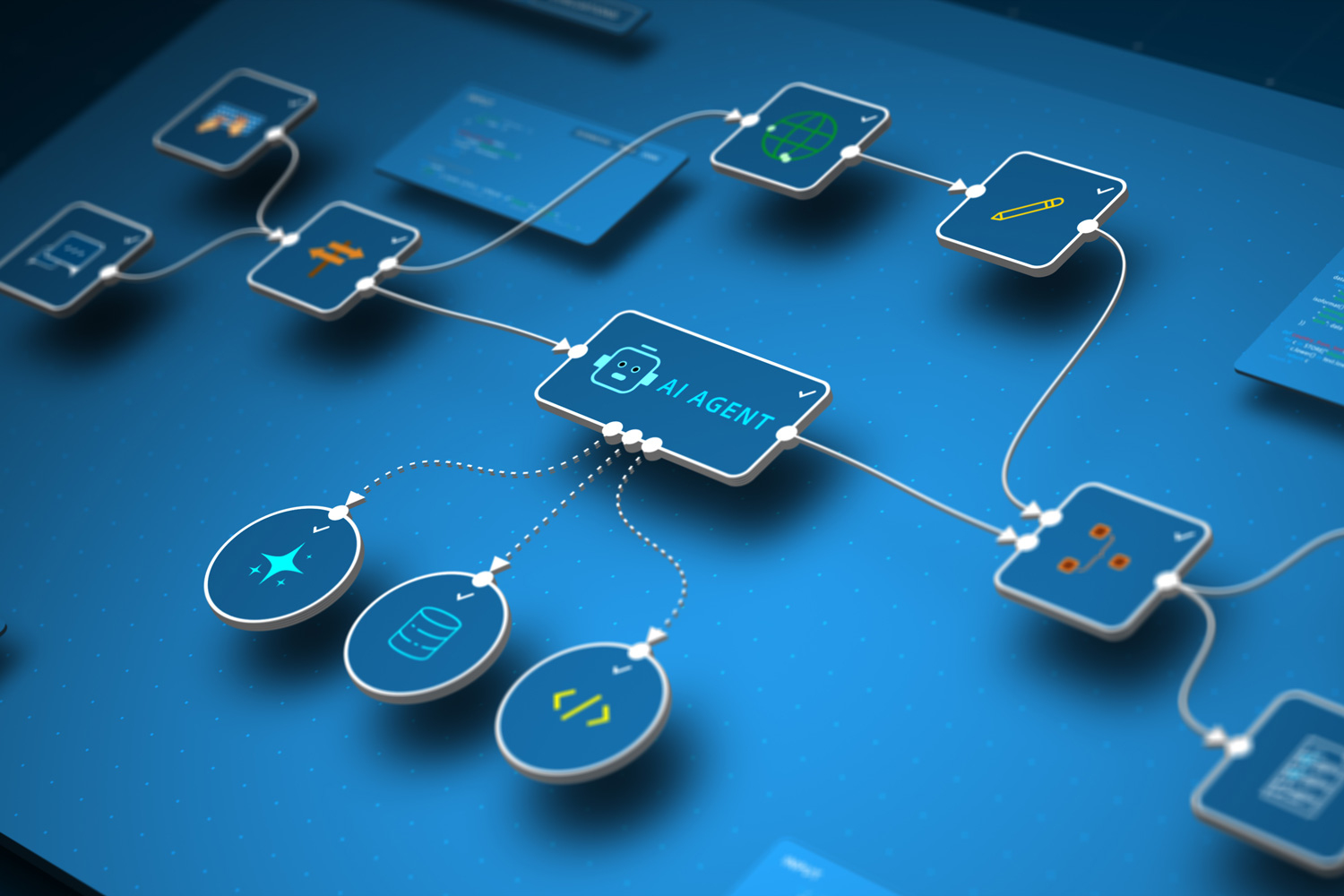
Computer scientist Phillip Isola cuts through the hype to explain how AI agents work and what the future might hold for this rapidly advancing technology.
The rapid advancement of large language models and increasing computational power has made the development and discussion of autonomous AI agents a present reality rather than a distant future concept.
Understanding the capabilities and future trajectory of agentic AI is crucial for strategic readers as it portends significant changes in labor markets, software architecture, and economic productivity.
The discussion around AI is shifting from static models to dynamic, autonomous systems capable of executing complex tasks, indicating a move towards more proactive and less human-supervised AI applications.
- · AI development companies
- · Early adopters of AI agents
- · Software companies integrating agentic capabilities
- · Companies with rigid, legacy software systems
- · Traditional white-collar automation providers
- · Manual workflow-dependent industries
Increased efficiency and automation in specific white-collar tasks through AI agents.
Disruption of existing SaaS models as agents integrate and automate multi-application workflows.
Re-evaluation of business processes and organizational structures as agentic AI changes the nature of work and decision-making.
This signal links to a primary source. Continuum Brief monitors and indexes it as part of the live intelligence stream — we do not republish source content.
Read at MIT News — AI