QCraft demonstrates urban NOA on Qualcomm’s latest Snapdragon Ride chip, targets 2026 global mass production
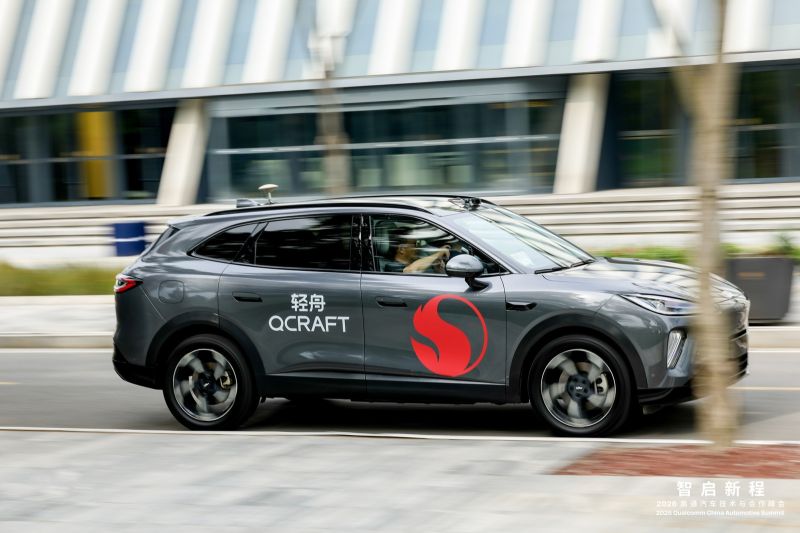
QCraft has demonstrated its urban Navigate-on-Autopilot (NOA) system running on Qualcomm’s SA8650P Snapdragon Ride platform in production vehicles, putting the autonomous driving company on track for global mass production this year. The demonstration took place on June 5 at Qualcomm’s Automotive Technology and Cooperation Summit in Wuxi, China, where attendees took live test rides in […]
The autonomous driving industry is maturing, with companies transitioning from R&D to demonstrating production-ready systems on advanced hardware for mass market adoption.
This demonstration indicates accelerated progress in urban autonomous driving capabilities leveraging powerful edge AI chips, moving closer to widespread commercial deployment.
The performance benchmark set by QCraft on Qualcomm's platform validates the feasibility of advanced urban NOA systems for mass production, accelerating the timeline for autonomous vehicle integration.
- · QCraft
- · Qualcomm
- · Automotive OEMs
- · Autonomous vehicle software developers
- · Competitors with less mature AD technology
- · Traditional human-driven transport services
Mass production of vehicles with urban Navigate-on-Autopilot capabilities will begin, making advanced autonomous features more accessible.
Increased competition among autonomous driving solution providers will drive innovation and cost reduction in the automotive sector.
Ethical and regulatory frameworks for widespread autonomous driving will face increased pressure for rapid development and standardization.
This signal links to a primary source. Continuum Brief monitors and indexes it as part of the live intelligence stream — we do not republish source content.
Read at Robotics & Automation News