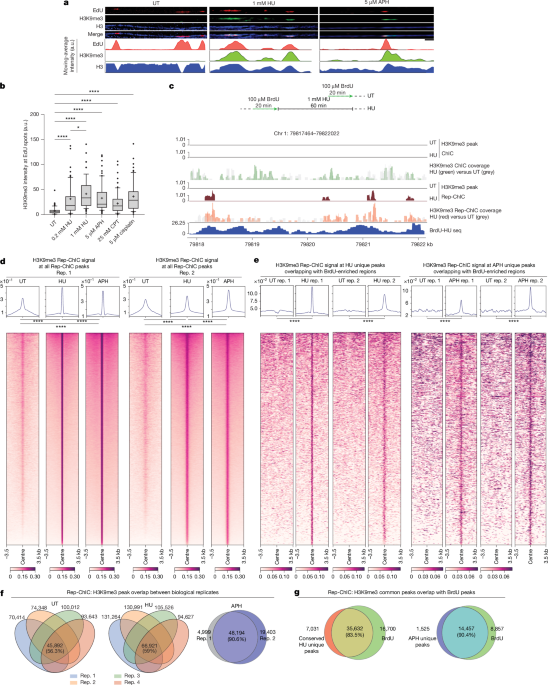
Nature, Published online: 01 July 2026; doi:10.1038/s41586-026-10695-1 Replication stress induces the formation of transient chromatin loops that enclose de novo heterochromatin-enriched stalled replication forks.
This is a new research finding published in a prominent scientific journal, indicating recent scientific advancement in understanding fundamental biological processes.
Understanding how cells protect genomic integrity during replication stress has implications for disease mechanisms, particularly cancer and aging, and could inform future therapeutic strategies.
This research reveals a novel protective mechanism involving transient chromatin loops, deepening our understanding of DNA repair and genome stability.
- · Biotech researchers
- · Oncology researchers
- · Pharmaceutical R&D
Increased fundamental knowledge about how cells respond to replication stress and maintain genetic stability.
Potential identification of new molecular targets for drugs that interfere with or enhance these protective mechanisms.
Long-term development of novel therapeutic approaches for diseases linked to genomic instability, such as certain cancers.
This signal links to a primary source. Continuum Brief monitors and indexes it as part of the live intelligence stream — we do not republish source content.
Read at Nature — Latest Research