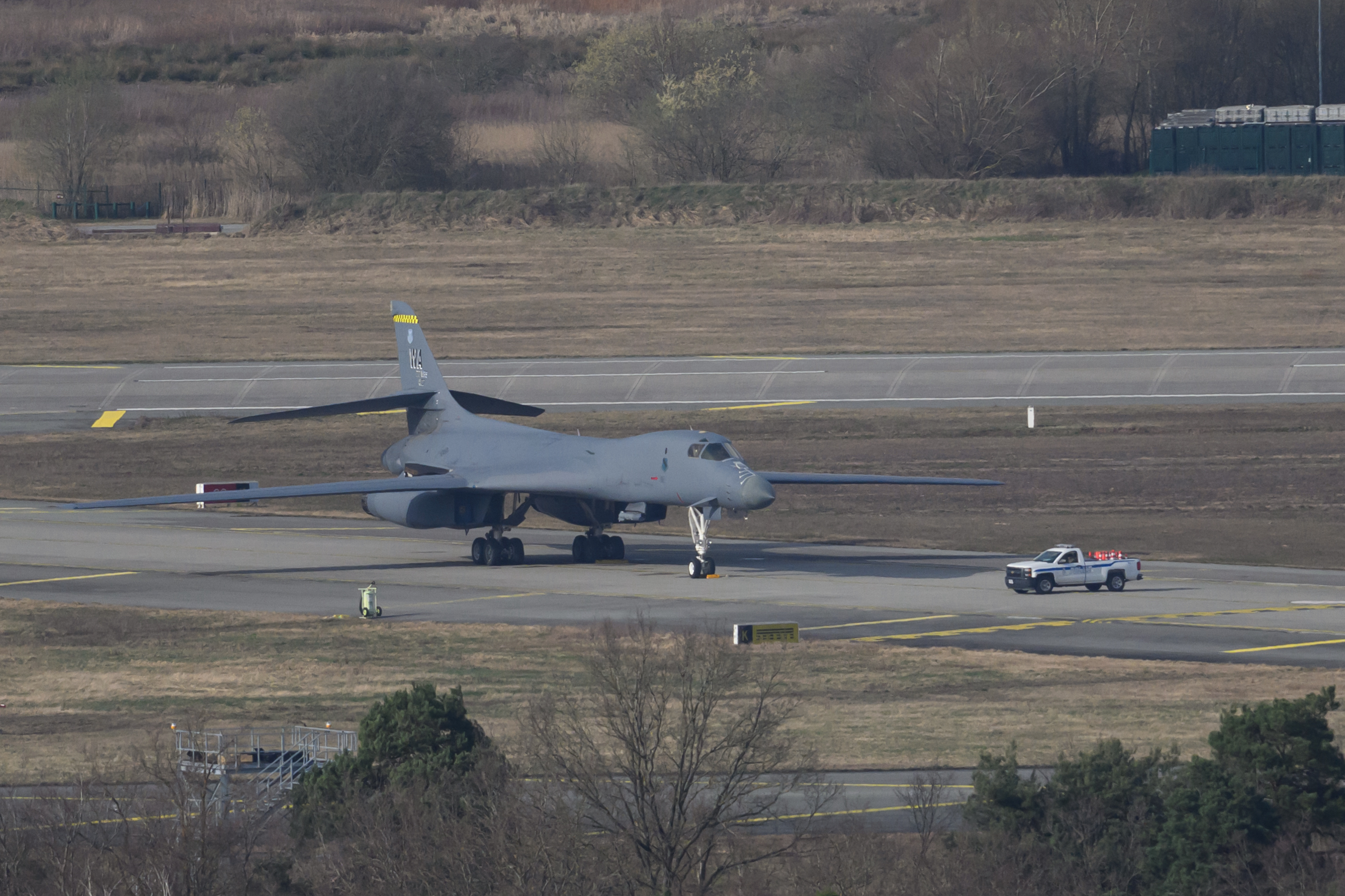
The number of U.S. fighter jets is set to fall by a third, Spiegel cited U.S. envoy Alexander Velez-Green as saying during the closed-door meeting.
The US military is likely undergoing a strategic re-evaluation of force posture and resource allocation, potentially driven by evolving geopolitical priorities and internal budgetary pressures.
This move significantly diminishes NATO's available conventional deterrent capability in Europe, forcing member states to re-evaluate their defense strategies and potentially increase their own military spending.
The immediate availability of US strategic airpower and naval assets for NATO crisis response is reduced, shifting more responsibility and potential vulnerability to European allies.
- · European domestic defense industries
- · Nations prioritizing localized defense capabilities
- · NATO's collective defense readiness
- · US global force projection
- · European security architecture
NATO will have fewer US strategic assets for immediate deployment in a crisis.
European NATO members may accelerate their own defense spending and industrial modernization to fill the capability gap.
This could lead to a more independent European defense posture, potentially reducing US influence in European security matters over the long term.
This signal links to a primary source. Continuum Brief monitors and indexes it as part of the live intelligence stream — we do not republish source content.
Read at Defense News