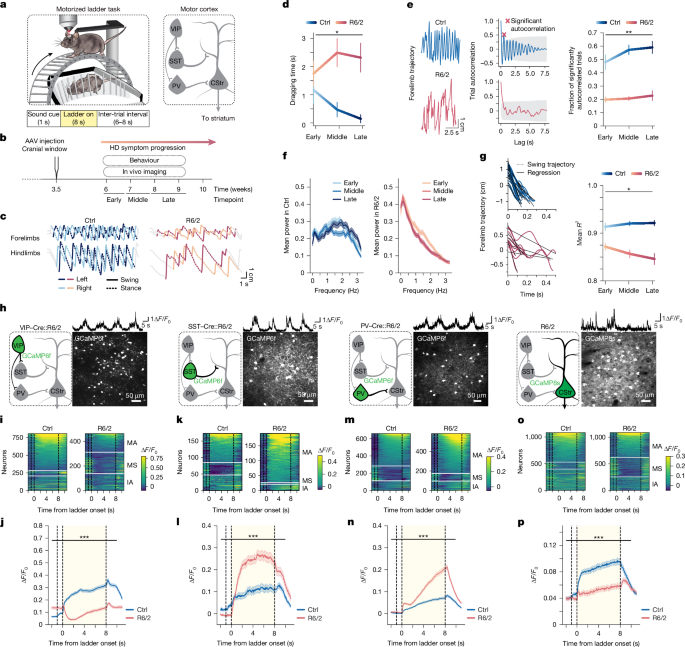
Nature, Published online: 01 July 2026; doi:10.1038/s41586-026-10671-9 In a mouse model of Huntington’s disease, targeted modulation of neuronal activity restores network function and improves motor deficits.
This research provides a breakthrough in understanding and potentially treating Huntington's disease, leveraging advanced biological modulation techniques.
It demonstrates a novel therapeutic avenue for neurodegenerative diseases by restoring network function, which could generalize to other complex neurological disorders.
The targeted modulation of neuronal activity in a disease model signals a shift towards more precise and effective treatments for previously intractable conditions.
- · Biotech companies focused on neurological disorders
- · Patients with Huntington's disease
- · Neuroscience researchers
- · Pharmaceutical industry
- · Companies reliant on less precise therapeutic approaches
Successful translation to human trials could lead to the first disease-modifying treatment for Huntington's disease.
The methodology could inspire similar approaches for other neurodegenerative conditions like Alzheimer's or Parkinson's.
This could accelerate investment and innovation in broader synthetic biology applications for human health, redefining 'curable' diseases.
This signal links to a primary source. Continuum Brief monitors and indexes it as part of the live intelligence stream — we do not republish source content.
Read at Nature — Latest Research