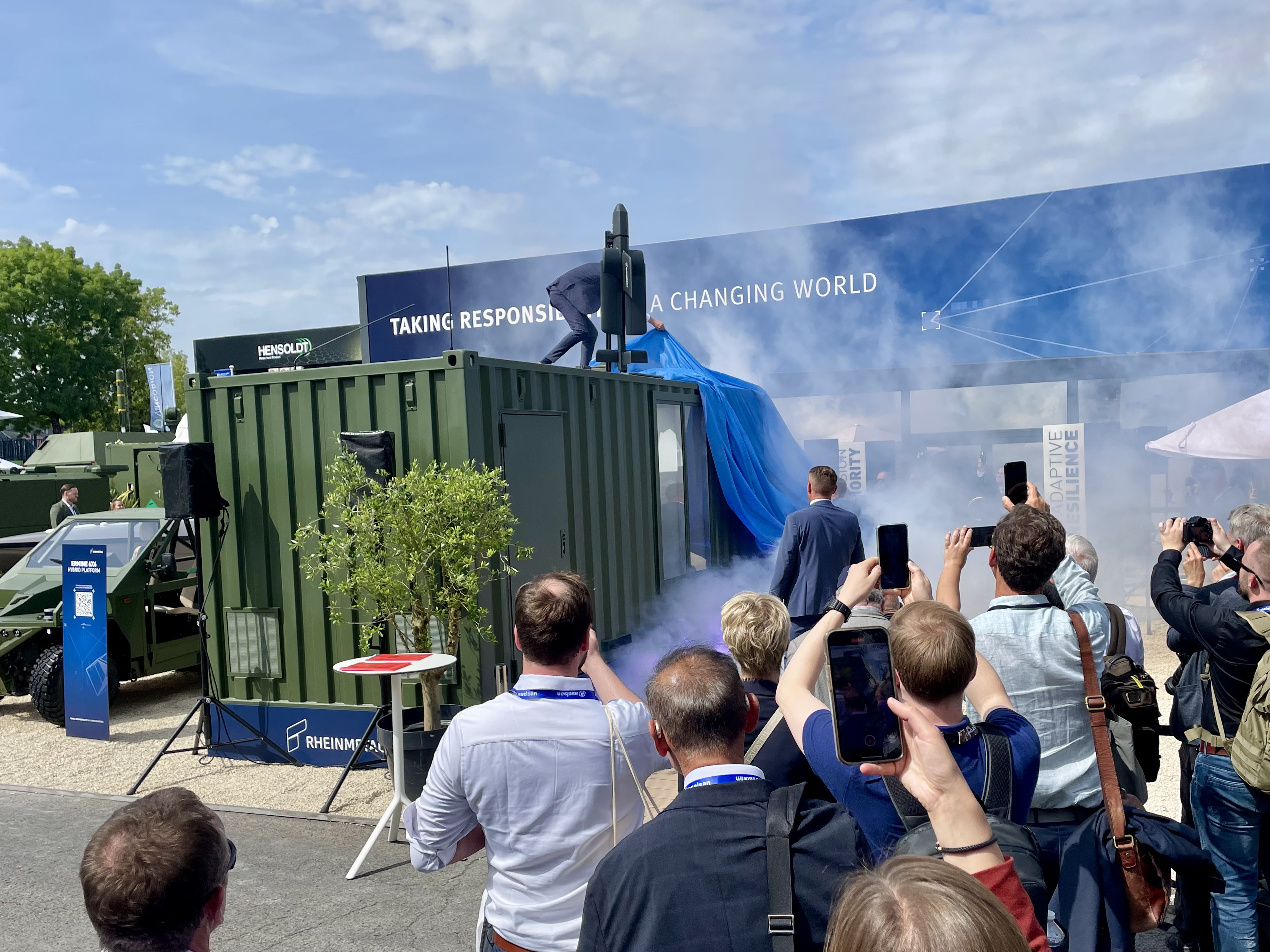
One container can hold 18 of the company’s FV-014 munitions, meant to plop out of the container by way of rocket-assisted start.
The ongoing conflict in Ukraine demonstrates the urgent need for cost-effective, readily deployable, and mass-producible autonomous weapon systems, accelerating the development and fielding of such technologies by major defense contractors.
This development signifies a substantial leap in deployable drone technology for conventional forces, offering new capabilities for swarm attacks and disrupting traditional battlefield dynamics, influencing future military doctrine and procurement.
Militaries can now deploy mass drone attack capabilities from standard shipping containers, making distributed, autonomous warfare more accessible and scalable, changing how and where drone swarms can be launched.
- · Rheinmetall
- · European defense sector
- · Militaries adopting drone swarm tactics
- · Software-defined defense platforms
- · Traditional air defense systems
- · Countries with limited drone counter-measures
- · Legacy defense manufacturers
This technology enables rapid, covert deployment of swarm drone capabilities from virtually any location with logistical access.
It will drive an arms race in counter-drone technologies and AI-powered defense systems to mitigate swarm attacks.
The proliferation of such containerized drone systems could lower the barrier to entry for state and possibly non-state actors in deploying advanced autonomous warfare capabilities.
This signal links to a primary source. Continuum Brief monitors and indexes it as part of the live intelligence stream — we do not republish source content.
Read at Defense News