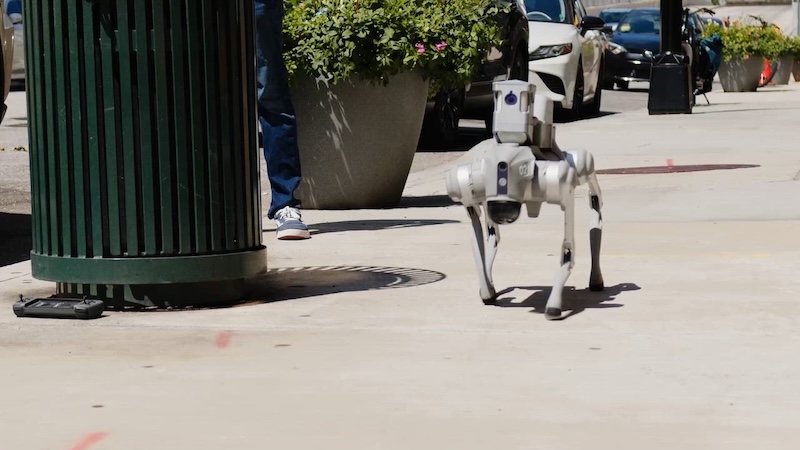
Robot dogs are increasingly being deployed in industrial and commercial security applications, but a recent incident in Atlanta showed how quickly the technology is moving into real-world law enforcement support roles. According to a report by Atlanta News First, robotic security dogs helped track and corner two suspects accused of breaking into vehicles at the […]
The increasing maturity and affordability of robotic technology, combined with a growing need for enhanced security and law enforcement efficacy, is driving this real-world deployment.
This incident demonstrates the immediate practical application of AI robotics in law enforcement, pushing beyond industrial uses and signaling a new phase of public integration for these technologies.
The explicit use of robotic dogs in active police operations for tracking suspects means law enforcement agencies will increasingly consider and adopt similar AI-powered tools, altering traditional policing tactics.
- · AI robotics manufacturers
- · Security technology providers
- · Law enforcement agencies
- · Perpetrators of petty crime
- · Traditional security guard services
Police departments will accelerate the procurement and integration of AI-powered robotic units for various surveillance and enforcement tasks.
Public discourse will intensify regarding the ethical implications, oversight, and potential overreach of autonomous robotic systems in civil society.
The development of counter-robotics tactics and technologies may emerge among criminal elements or privacy advocacy groups.
This signal links to a primary source. Continuum Brief monitors and indexes it as part of the live intelligence stream — we do not republish source content.
Read at Robotics & Automation News