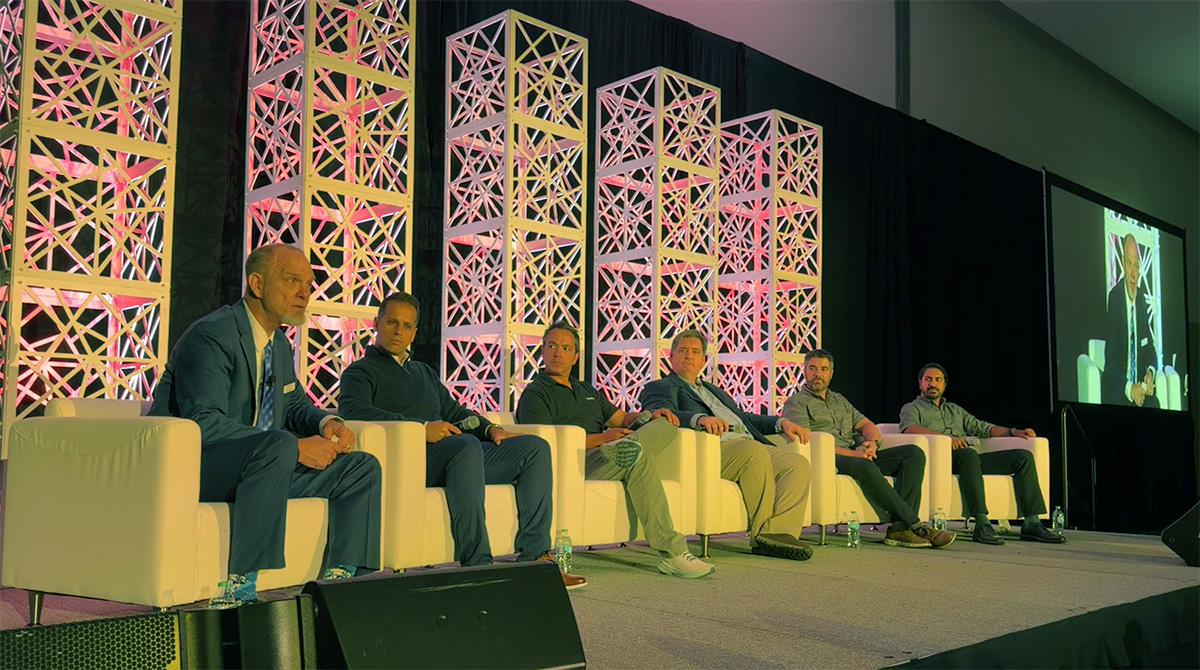
At the Robotics Summit & Expo, experts weighed in on humanoid robotics today — and the ability to achieve a $20,000 price point tomorrow. The post Robotics Summit panel explores the state of humanoid robot design appeared first on The Robot Report .
The conversation around a $20,000 price point indicates reaching a commercial viability threshold for humanoid robots, coinciding with rapid advances in AI and hardware. Events like the Robotics Summit bring together key stakeholders to discuss these advancements and their commercialization paths.
Achieving a $20,000 price point for humanoid robots would dramatically expand their addressable market beyond niche industrial applications, enabling widespread adoption in logistics, service, and potentially consumer sectors. This breakthrough enables widespread adoption in a range of industries.
The perceived barrier to entry for commercial humanoid robots shifts from technical feasibility and high cost to refining use cases, safety, and integration, potentially accelerating the development and deployment timeline. Focus shifts from possibility to practicality.
- · Robotics manufacturers
- · Automation solution providers
- · Logistics and manufacturing sectors
- · AI software developers
- · Sectors reliant on cheap manual labor
- · Traditional industrial automation lacking embodied AI
- · Companies unable to integrate advanced robotics
Increased investment and R&D into mass-producible humanoid robot components and AI for general-purpose tasks.
Disruption of labor markets in physical economy sectors, leading to a re-evaluation of workforce training and social safety nets.
The emergence of entirely new service industries built around accessible, versatile robotic labor, fundamentally altering the consumer and enterprise landscape.
This signal links to a primary source. Continuum Brief monitors and indexes it as part of the live intelligence stream — we do not republish source content.
Read at The Robot Report