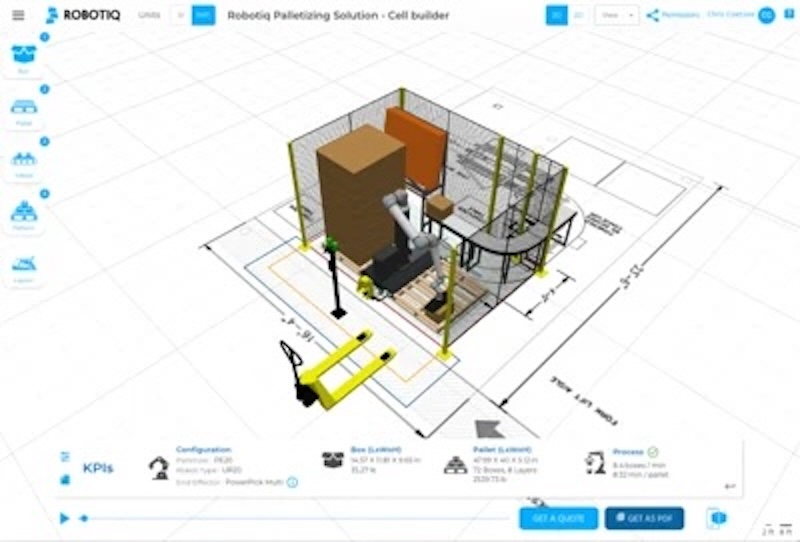
Robotiq has introduced IQ, an AI-enabled platform designed to make robotic Workcell integration faster, more predictable, and easier to scale. Enabling a much-needed shift from a manual, expert-dependent approach to automatic integration, IQ captures unstructured automation project data, coordinates engineering workflows, and helps partners generate validated workcell designs based on real customer inputs and historical […]
The increasing complexity of robotic systems and the growing demand for automation necessitates more efficient and scalable integration solutions, pushing companies to leverage AI for process improvements.
This development addresses a critical bottleneck in robotics adoption, making advanced automation more accessible and faster to deploy, which has widespread economic implications.
The reliance on manual, expert-driven robotic workcell integration will decrease, replaced by a more automated, AI-driven approach, potentially accelerating industrial robot deployment across sectors.
- · Robotics integrators
- · Manufacturing sector
- · Robotics companies
- · AI platform providers
- · Traditional manual integration service providers
- · Businesses slow to adopt AI-powered automation
- · Outdated automation software
Faster and more predictable deployment of robotic workcells will lead to increased automation rates in manufacturing and logistics.
The reduced cost and complexity of integration could lower the barrier to entry for smaller companies to adopt advanced robotics.
A widespread adoption of AI-driven robotic integration might accelerate the development of more sophisticated AI agents capable of managing complex physical systems.
This signal links to a primary source. Continuum Brief monitors and indexes it as part of the live intelligence stream — we do not republish source content.
Read at Robotics & Automation News