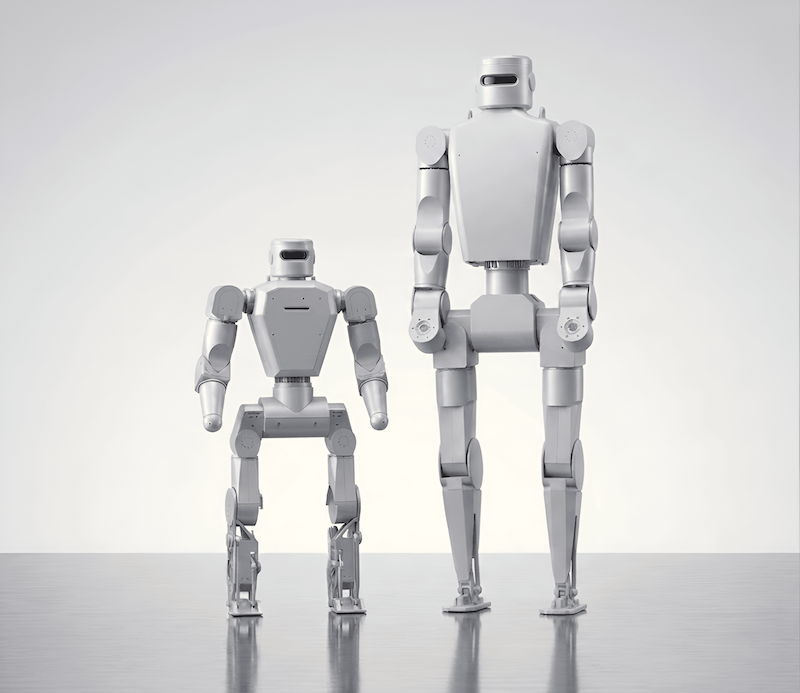
Rotaku has opened reservations for Domo, a compact humanoid robot platform designed for developers, makers, educators and robotics teams working with real humanoid hardware. The Domo lineup starts at $2,999 and is intended to make humanoid robot development more accessible to users working on motion control, teleoperation, manipulation, robot interaction and embodied AI. Founder vision: […]
Advances in robotics and AI hardware, coupled with a push for broader accessibility, are enabling the launch of affordable humanoid robot platforms. This timing aligns with increasing market demand for developer-friendly robotics tools to accelerate innovation.
The introduction of low-cost humanoid robot platforms will significantly broaden access to hardware for development, training, and research, democratizing the field beyond well-funded corporate and academic labs.
Humanoid robot development will become more accessible to a wider range of developers, hobbyists, and educational institutions, potentially accelerating innovation and applications in areas like motion control, teleoperation, and embodied AI.
- · Robotics developers
- · Educational institutions
- · AI hardware manufacturers
- · Automation sector
- · High-cost specialized robotics labs
- · Proprietary robotics software providers (without open interfaces)
The increased availability of affordable humanoid hardware will lead to a rapid expansion of development in humanoid applications and research.
A community of independent developers will emerge, similar to the early days of personal computing, contributing to novel and unexpected uses for humanoid robots.
The accelerated development could lead to specialized, low-cost humanoid robots entering niche commercial and even consumer markets faster than previously anticipated.
This signal links to a primary source. Continuum Brief monitors and indexes it as part of the live intelligence stream — we do not republish source content.
Read at Robotics & Automation News