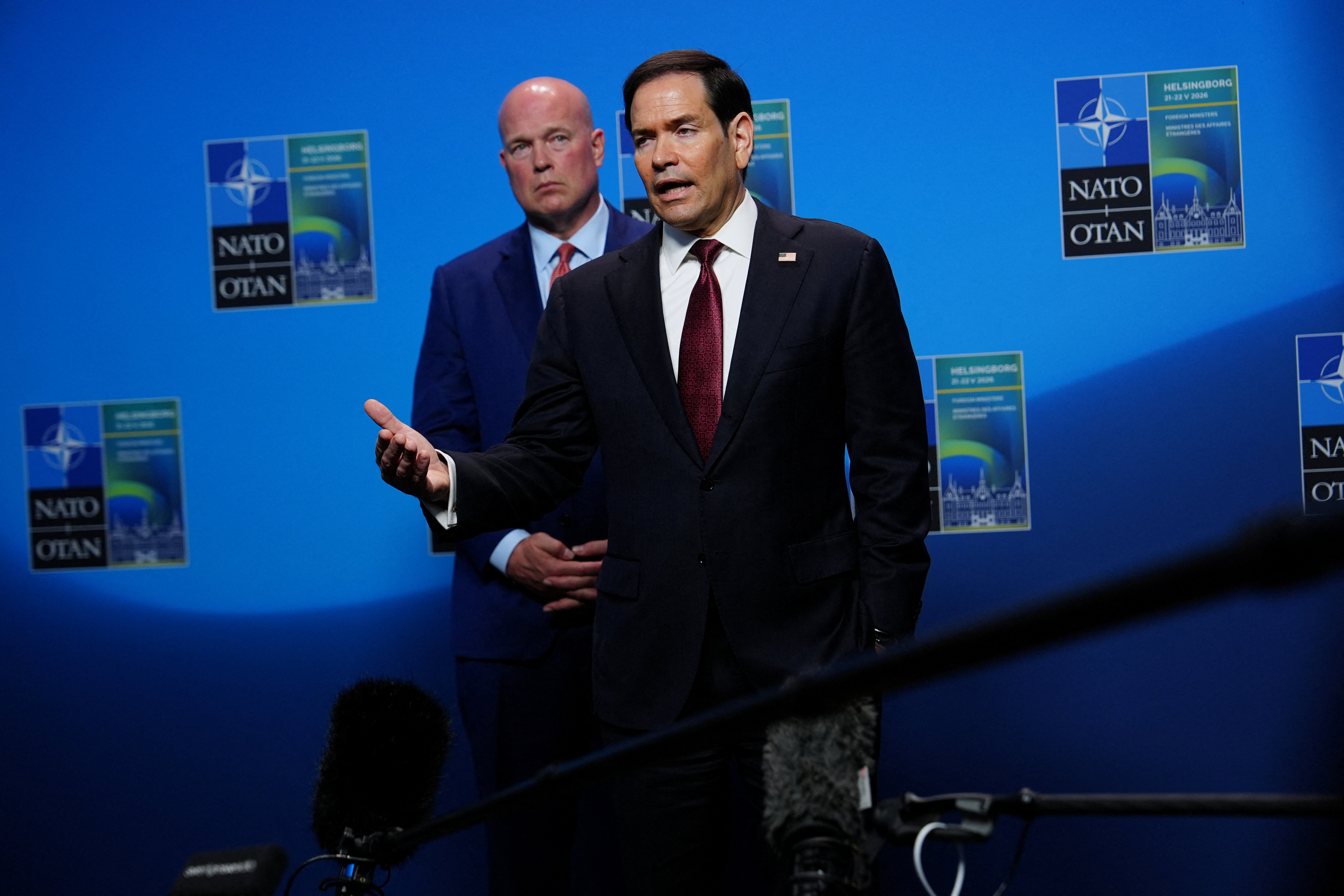
Secretary of State Marco Rubio is casting new doubt on NATO's relevance after key allies recoiled from backing Washington’s “Operation Epic Fury.”
The headline indicates a key summit, providing a focal point for Rubio to express disaffection and potentially force a reckoning with NATO's operational parameters post-Operation Epic Fury.
This event highlights growing friction within the NATO alliance, potentially signaling a realignment of global defense strategies and responsibilities, which impacts geopolitical stability and defense spending priorities.
The perceived unity and operational cohesion of NATO are openly questioned by a senior US official, suggesting a potential shift in US commitment or a demand for greater burden-sharing from European allies.
- · Non-NATO aligned military powers
- · US nationalist political factions
- · Defense industries focusing on domestic needs
- · NATO's collective defense principle
- · European defense autonomy
- · Multilateral institutions
NATO allies may begin to reconsider their defense budgets and strategic alignments, potentially bolstering independent European defense initiatives.
A weakened NATO could embolden revisionist states and lead to increased regional military tensions, forcing a re-evaluation of security guarantees.
The long-term erosion of NATO could prompt a more fractured global security landscape, with individual nations or smaller blocs forming new alliances based on immediate perceived threats rather than historic ties.
This signal links to a primary source. Continuum Brief monitors and indexes it as part of the live intelligence stream — we do not republish source content.
Read at Defense News