Samsung Heavy Industries recruits Greek shipowner and Supermicro to bring 50MW floating AI data centers to market — can be powered by solid oxide fuel cells running on liquefied natural gas
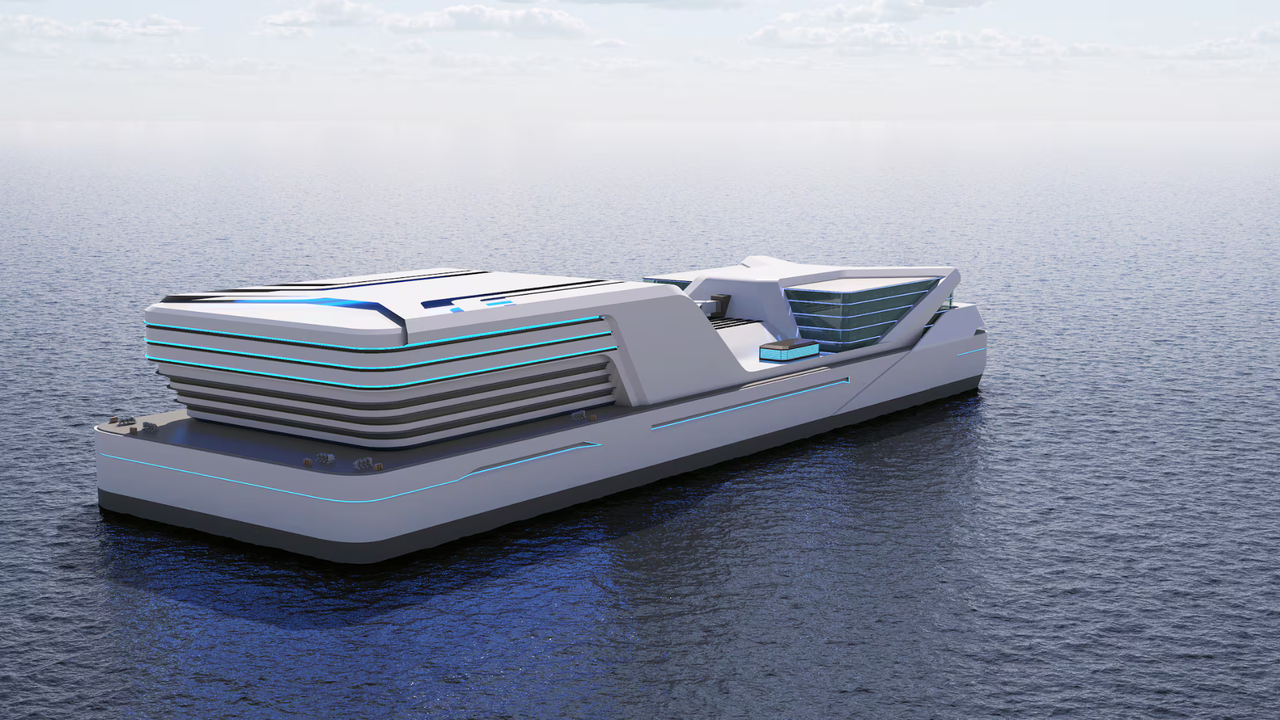
Besides Samsung Heavy, Japan’s MOL is also building a 73 MW floating data center with Karpowership for a 2027 deployment.
The accelerating demand for AI compute power combined with land, grid, and water constraints is forcing innovation in data center deployment and energy solutions.
This highlights the acute and growing energy and infrastructure needs of AI, pushing compute infrastructure towards more flexible, scalable, and environmentally adaptable solutions.
Data center location is becoming untethered from traditional land-based infrastructure, opening new possibilities for deployment and resource utilization, particularly concerning power generation.
- · Shipbuilders
- · Energy companies (LNG, fuel cell tech)
- · Hyperscalers and AI infrastructure providers
- · Coastal regions with access to LNG
- · Traditional land-locked data center developers
- · Areas with high energy costs or grid instability
- · Regions heavily reliant on water for cooling
Floating data centers offer a solution for rapid AI scaling by mitigating land, power, and cooling constraints.
Increased demand for maritime engineering, advanced energy solutions, and potentially new international regulatory frameworks for offshore compute facilities.
The proliferation of sovereign 'AI islands' capable of self-sufficient compute and energy generation, leading to new geopolitical considerations for data sovereignty and control.
This signal links to a primary source. Continuum Brief monitors and indexes it as part of the live intelligence stream — we do not republish source content.
Read at Tom's Hardware